
Blog
Can Invisalign Fix Crooked Teeth? Understanding Treatment Process, Duration and Results
Can Invisalign Fix Crooked Teeth?
Yes, Invisalign can correct many cases of crooked teeth, particularly selected mild-to-moderate alignment problems. The clear aligners use controlled forces to move teeth progressively according to an individualized treatment plan.
“Crooked teeth” can refer to different orthodontic conditions. Some patients may have mild crowding or rotated teeth, while others may have significant crowding combined with a complex bite.
A 2025 systematic review and meta-analysis of 21 randomized controlled trials involving 970 participants found that clear aligners and fixed appliances both performed well for simple, non-extraction malocclusions. The authors also noted that the overall quality of evidence was low and that further research is needed for complex cases.

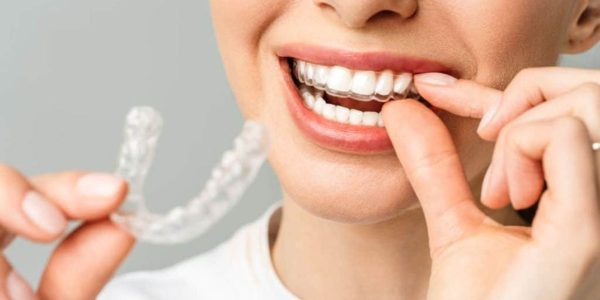
What Types of Crooked Teeth Can Clear Aligners Address?
Depending on the orthodontic condition and required tooth movements, clear aligners may be used for:
- Crowded teeth
- Spacing between teeth
- Certain rotated teeth
- Crooked front teeth
- Selected bite problems
- Mild-to-moderate malocclusions
Treatment suitability varies according to the complexity of the tooth movement and the patient’s overall orthodontic condition.
Can Invisalign Fix Crowded Teeth?
Invisalign can treat many cases of dental crowding. The amount of crowding, available space and movements required all influence the treatment approach.
Research supports clear aligners for mild-to-moderate crowding, although predictability can vary when more complex movements are required.
Can Invisalign Fix Rotated Teeth?
Some rotated teeth can be corrected with clear aligners. However, rotation is among the tooth movements that can be less predictable compared with certain simpler movements.
The degree of rotation, position of the tooth and overall treatment plan affect the expected outcome.
How Does Invisalign Straighten Crooked Teeth?
Invisalign uses a series of custom-designed aligners, with each aligner programmed to produce specific tooth movements. The treatment generally involves assessment, digital records, treatment planning, aligner wear, progress reviews, refinements when required and retention.
1. Dental and Orthodontic Assessment
The clinician evaluates the teeth, bite and oral health before treatment.
The assessment may include:
- Tooth position
- Crowding
- Spacing
- Bite
- Jaw relationship
- Gum health
- Existing dental restorations
- Required tooth movements
2. Digital Scanning and Treatment Planning
Digital scanning creates a three-dimensional representation of the patient’s teeth.
Invisalign uses digital scans to develop customized treatment plans and visualize planned tooth movements.
3. Progressive Tooth Movement
The teeth are moved through a sequence of aligners rather than being repositioned simultaneously.
Each aligner applies controlled pressure to selected teeth according to the treatment plan.
4. Progress Monitoring
Follow-up appointments allow the clinician to evaluate tooth movement and make treatment adjustments when required.
The actual tooth movement may not always match the original digital plan exactly.
5. Refinements
Some patients may need additional aligners if certain teeth have not moved sufficiently or further correction is required.
Research on clear-aligner predictability shows that planned and achieved tooth movements can differ.
6. Retention
After active orthodontic treatment, retainers are used to maintain the corrected tooth positions.
Teeth can shift after orthodontic treatment, making retention an important part of long-term treatment.
How Long Does Invisalign Take to Fix Crooked Teeth?
There is no fixed Invisalign treatment duration for crooked teeth. Treatment time depends on the complexity of the case and the movements required.
Factors that can affect treatment duration include:
- Degree of crowding
- Number of teeth requiring movement
- Type of tooth movement
- Bite correction
- Patient compliance
- Number of aligners
- Need for refinements
- Individual response to treatment
Invisalign states that treatment duration varies according to case complexity, and some patients may begin noticing changes within several months.
A personalized treatment timeline requires an examination and treatment plan rather than a universal duration.
What Is the Invisalign Treatment Process?
For someone considering Invisalign in Madurai, the treatment journey generally includes the following stages.
Step 1: Consultation
The clinician examines the teeth, bite, oral health and orthodontic concerns.
Step 2: Records and Scanning
Digital impressions or intraoral scans may be taken along with photographs and appropriate diagnostic imaging.
Step 3: Treatment Planning
The required tooth movements are planned based on the patient’s orthodontic condition.
Step 4: Aligner Production
A series of custom aligners is produced according to the treatment plan.
Step 5: Wearing the Aligners
The patient follows the prescribed wear schedule and changes aligners according to the clinician’s instructions.
Step 6: Progress Reviews
Regular appointments are used to monitor tooth movement and treatment progress.
Step 7: Refinement if Required
Additional aligners may be prescribed when further correction is needed.
Step 8: Retention
Retainers are used after active treatment to maintain the corrected tooth positions.
What Results Can You Expect From Invisalign?
Invisalign treatment aims to improve tooth alignment and, where included in the treatment plan, correct selected bite relationships.
The final result depends on the starting condition, planned movements, patient compliance and individual response to treatment.
It is useful to distinguish between:
Planned movement and Clinically achieved movement.
A digital treatment simulation represents the planned sequence of tooth movements and does not guarantee an identical final clinical result.
Research has found that clear-aligner effectiveness varies according to movement type. A 2023 scoping review reported that clear aligners were effective for mild-to-moderate crowding resolution, while movements such as rotation, intrusion and extrusion were less predictable.
A 2026 systematic review of adult anterior tooth movement also reported mixed results for movements including extrusion, tipping and torque. The findings indicate that predictability varies according to the specific movement being attempted.
What Does a Successful Result Involve?
Depending on the treatment plan, the goals may include:
- Improved tooth alignment
- Reduced crowding
- Improved spacing
- Improved tooth positioning
- Selected bite corrections
- Better coordination of the dental arches
Treatment goals vary from patient to patient.
Can Invisalign Fix Severely Crooked Teeth?
Some complex cases may be treated with clear aligners, but severe misalignment requires careful orthodontic evaluation.
The appearance of crooked teeth does not by itself indicate the complexity of the underlying orthodontic problem. The required tooth movements, bite relationship, available space and other clinical factors also influence treatment selection.
Depending on the case, treatment options may include:
- Invisalign
- Fixed braces
- Ceramic braces
- A combination approach
- Other orthodontic treatment
- Additional dental procedures where clinically necessary
Invisalign vs Braces for Crooked Teeth
Neither Invisalign nor braces is universally better for every patient.
Invisalign offers removable, clear aligners that are less noticeable during everyday activities.
Braces can provide greater control for certain complex orthodontic movements and may be recommended for specific malocclusions.
The appropriate treatment depends on the diagnosis, required tooth movements and treatment objectives.
How Invisalign Treatment Corrects Tooth Alignment and Bite Issues
Invisalign treatment uses a series of clear aligners to gradually move teeth towards their planned positions. For patients in Madurai, an orthodontic evaluation helps assess tooth alignment, bite concerns and the movements required.
Treatment suitability depends on the complexity of the misalignment, oral health and individual goals. Based on these factors, Invisalign, traditional braces or another orthodontic approach may be recommended.
About Dr. Amritha L
Dr. Amritha L is an orthodontist with a strong academic foundation and a refined aesthetic vision. She completed her Bachelor of Dental Surgery (BDS) from SRM University, Chennai, followed by her Master of Dental Surgery (MDS) in Orthodontics from The Tamil Nadu Dr. M.G.R. Medical University.
Her expertise extends into aesthetic dentistry, with advanced training under leading mentors across India in natural and harmonious smile design. She also holds a Fellowship in Advanced Aesthetic Dentistry from the Institute of Laser and Aesthetic Medicine, with training in cosmetic techniques, laser dentistry and modern smile enhancement procedures.
Dr. Amritha follows a patient-centric approach that combines orthodontic treatment with aesthetic considerations and modern dental technology.
Conclusion
Yes, Invisalign can correct many cases of crooked teeth, particularly selected mild-to-moderate alignment problems. Clear aligners can address crowding, spacing, certain rotations and selected bite problems, while some complex movements may be less predictable.
The treatment typically involves orthodontic assessment, digital scanning, treatment planning, a sequence of aligners, progress monitoring, refinements when required and retention.
Treatment duration and results vary according to the complexity of the case, required tooth movements, compliance and individual response.
For patients considering Invisalign in Madurai, an orthodontic evaluation can establish the appropriate treatment option and provide a case-specific treatment plan.
Frequently Asked Questions
Yes. Invisalign can correct many cases of crooked or crowded teeth using a sequence of custom clear aligners. Suitability depends on the severity and type of misalignment and the specific tooth movements required. Evidence is stronger for selected mild-to-moderate cases than for complex orthodontic problems.
Some complex cases may be treated with clear aligners, but severe misalignment requires individual evaluation. Certain tooth movements are less predictable with aligners, so fixed braces or another orthodontic approach may sometimes be recommended.
Treatment duration varies according to crowding, bite, required tooth movements, compliance and the need for refinements. Mild alignment problems may require less treatment than complex cases. A personalized treatment timeline can be provided after examination and treatment planning.
Yes, clear aligners can treat many cases of dental crowding. Research supports their use for mild-to-moderate crowding, although predictability varies according to the movements required. More significant crowding may require a more complex orthodontic approach.
Invisalign can correct some rotated teeth, but rotation can be less predictable than certain other orthodontic movements. The degree of rotation, tooth position and overall treatment plan influence suitability.
Neither treatment is universally better. Invisalign provides a removable and less visible option, while braces can offer greater control for certain complex orthodontic movements. Treatment selection depends on the patient's diagnosis, required movements and treatment goals.
Orthodontic treatment moves teeth into corrected positions, but teeth can shift after treatment. Retainers are generally included in the post-treatment plan to help maintain alignment. Long-term retention depends on following the instructions provided by the treating dental professional.
Yes. Adults can receive clear-aligner treatment when their orthodontic condition is suitable. Age alone does not determine eligibility. The clinician evaluates tooth alignment, bite, oral health and the movements required.
It can correct some cases of overlapping or crowded front teeth. Treatment depends on the available space and the tooth movements required to achieve alignment.
The treating professional can evaluate the tooth and determine whether additional aligners, treatment modifications or another approach is required. Planned and achieved tooth movements can differ, making progress monitoring and refinements relevant to some cases.
Consider a provider who can explain the diagnosis, treatment options, expected duration, limitations, monitoring process and retention plan. Invisalign suitability should be based on the individual's orthodontic requirements rather than appearance or price alone.
Contact Us
📞9003221393
📍Plot No. 25, S.L.C II Type, Vaigai Colony, Anna Nagar, Madurai PIN : 625020.