
Crown And Bridge
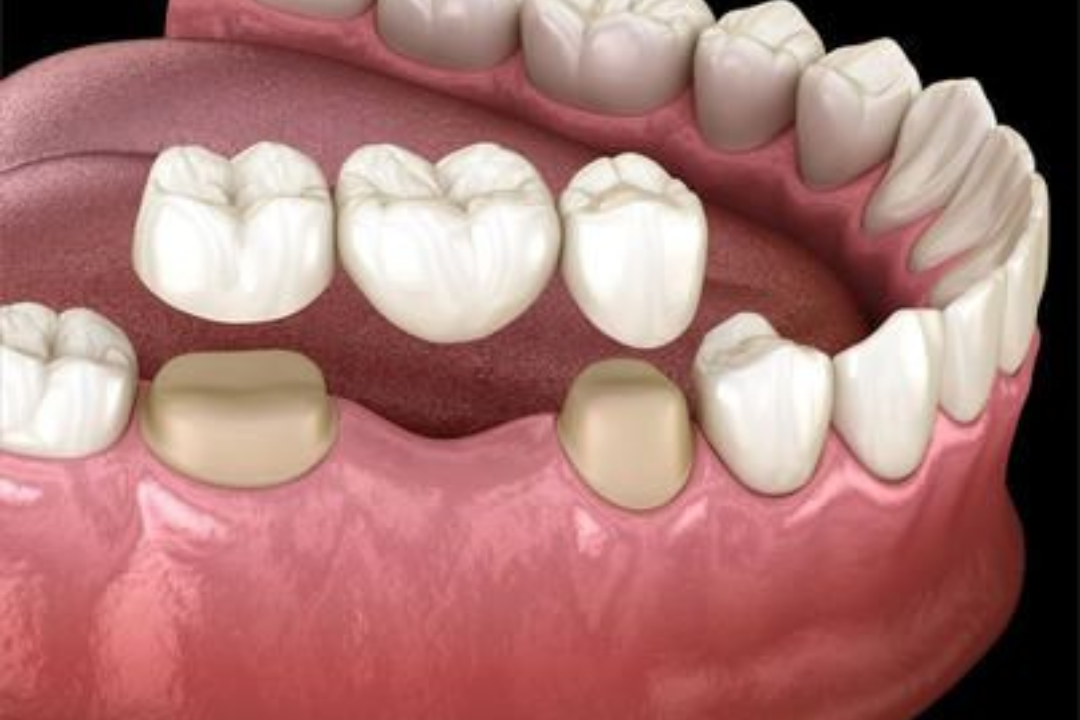
Crown And Bridge in Anna Nagar, Madurai
Restore Damaged Teeth and Replace Missing Teeth
A damaged tooth and a missing tooth require different types of restorative care.
A dental crown is used to restore and protect a tooth that is still present but has lost significant strength or structure. A dental bridge is used to replace one or more missing teeth by creating a fixed replacement supported by appropriate neighbouring teeth or other supporting structures.
At Dr. Amritha’s Dentistry, crown and bridge treatment can be considered according to the condition of the tooth, amount of remaining structure, location of the missing tooth, supporting teeth, bite and overall oral health.
The aim is to restore function and appearance while selecting a restoration that is appropriate for the individual situation.
What Is a Dental Crown?
A dental crown is a custom-made restoration that covers a prepared tooth to restore its shape, strength and function.
A crown may be considered when a tooth has suffered substantial structural loss that cannot be appropriately managed with a simple filling.
Common situations include:
- Extensive tooth decay
- A severely damaged or fractured tooth
- A heavily restored tooth
- Significant loss of tooth structure
- Certain teeth following root canal treatment
- A tooth requiring greater protection
A crown does not simply cover a cosmetic defect. It is a restorative treatment designed to provide coverage when the remaining tooth requires additional support or protection.
What Is a Dental Bridge?
A dental bridge is a fixed dental restoration used to replace one or more missing teeth.
A typical bridge uses supporting teeth on either side of a missing-tooth space, although bridge designs can vary.
A bridge can help restore:
- The visible appearance of missing teeth
- Part of the chewing function
- The continuity of the dental arch
- The space created by tooth loss
The suitability of a bridge depends heavily on the condition of the teeth or other structures that will support it.
A missing tooth does not automatically mean that a bridge is the right solution. Dental implants, removable dentures and other options may also need to be considered.
When Do You Need a Crown or a Bridge?
A crown is generally considered when the natural tooth is still present but has been significantly damaged or weakened, while a bridge is considered when one or more teeth are missing and a fixed replacement is appropriate.
A Crown May Be Considered When:
- A large portion of the tooth has been lost
- A tooth is structurally weakened
- A large filling has compromised the remaining tooth structure
- A tooth has suffered certain fractures
- A tooth requires additional protection after root canal treatment
- A filling or inlay/onlay cannot provide adequate restoration
A Bridge May Be Considered When:
- One or more teeth are missing
- Suitable supporting teeth are present
- The supporting teeth and surrounding tissues are healthy enough
- A fixed replacement is preferred
- A bridge is clinically appropriate compared with other tooth-replacement options
The final choice depends on the condition of the individual tooth or missing-tooth area.
How Do You Know Which Treatment You Need?
The easiest way to understand the difference is to look at what needs to be restored.
Natural tooth present but badly damaged → Crown may be considered
Tooth missing → Bridge may be considered
But this is only a starting point.
A dentist may also need to assess:
- Remaining tooth structure
- Supporting teeth
- Gum health
- Bone and surrounding tissues
- Bite
- Location of the tooth
- Extent of damage
- Presence of decay
- Existing restorations
- Overall oral health
This assessment helps determine whether a crown, bridge, filling, inlay/onlay, implant or another treatment is appropriate.
Can a Crown Protect a Weak Tooth?
Yes. A crown can provide coverage for a tooth that has lost substantial structure and requires greater protection.
For example, a tooth with extensive decay or a large existing restoration may have insufficient structure to function reliably with only a filling.
A crown can cover the prepared tooth and restore its functional shape.
However, a crown should not be used simply because a tooth has any amount of damage. If a more conservative restoration can adequately restore the tooth, full coverage may not be necessary.
Can a Crown Restore a Broken Tooth?
A crown can restore certain broken teeth when enough healthy tooth structure remains and the tooth is otherwise suitable for restoration.
The dentist may need to determine:
- How much of the tooth has broken
- Whether the fracture extends below the gum
- Whether the pulp is affected
- Whether there is an underlying crack
- How much healthy tooth structure remains
- Whether the tooth can support a crown
A severely cracked or non-restorable tooth may require a different treatment.
Can a Crown Be Used After Root Canal Treatment?
Yes, a crown may be considered after root canal treatment when the remaining tooth structure requires additional protection.
Root canal treatment addresses disease or damage involving the pulp. The subsequent restoration addresses the structural needs of the tooth.
Whether a crown is required depends on:
- Tooth type
- Amount of remaining structure
- Extent of previous damage
- Functional forces
- Overall restorability
The restoration should be selected based on the condition of the tooth after root canal treatment.
How Can a Bridge Replace a Missing Tooth?
A bridge replaces a missing tooth by placing an artificial tooth in the space and connecting it to supporting structures.
In a conventional bridge, the adjacent supporting teeth are prepared to receive crowns that hold the replacement tooth.
This creates a fixed restoration rather than a removable appliance.
The supporting teeth therefore play an important role in determining whether a conventional bridge is appropriate.
Can a Bridge Replace More Than One Tooth?
Yes, certain bridge designs can replace more than one missing tooth.
However, the number and position of missing teeth affect the design and the forces placed on the supporting structures.
The dentist may consider:
- Length of the missing-tooth space
- Location of the missing teeth
- Strength and health of supporting teeth
- Gum condition
- Bite
- Available support
- Overall oral health
A longer missing-tooth span may require a different solution from a single missing tooth.
What Is the Difference Between a Crown and a Bridge?
The simplest difference is their purpose.
Crown
A crown restores and covers a damaged natural tooth.
Bridge
A bridge replaces one or more missing teeth using a fixed restoration supported by appropriate structures.
A crown can therefore be used as an individual restoration, while crowns may also form part of certain bridge designs.
Crown or Filling: Which Is Right for Your Tooth?
A filling and crown are not interchangeable.
A filling may be appropriate when a cavity is relatively limited and sufficient healthy tooth structure remains.
A crown may be considered when the tooth has lost substantially more structure and requires greater coverage.
The decision can depend on:
- Size of the cavity
- Remaining tooth structure
- Tooth location
- Bite forces
- Existing restorations
- Structural strength
The objective is to avoid both under-treating a weakened tooth and unnecessarily removing healthy structure.
Crown or Inlay/Onlay: Which Is More Suitable?
An inlay or onlay can be considered when a damaged tooth requires more restoration than a conventional filling but still has enough healthy structure to avoid full-crown coverage.
A crown provides more extensive coverage.
Inlay
Generally restores an area within the cusps.
Onlay
Can extend over one or more cusps.
Crown
Provides broader coverage around the prepared tooth.
The dentist chooses between these options according to the amount of damage, remaining structure, cusp condition and functional requirements.
Bridge or Dental Implant: Which Should You Choose?
Both can be used to replace missing teeth, but they work differently.
A bridge uses supporting structures to hold the replacement tooth.
A dental implant is placed within the jaw and can support an individual replacement tooth or other prosthetic restoration.
The decision may depend on:
- Condition of neighbouring teeth
- Bone and gum health
- Number of missing teeth
- Bite
- Treatment objectives
- Suitability for implant treatment
- Preference for the type of restoration
There is no single option that is best for every missing-tooth situation.
What Types of Crowns Are Available?
Crowns can be made from different materials, each with different characteristics.
Common categories include:
- Ceramic crowns
- Porcelain-based restorations
- Zirconia crowns
- Metal-containing crowns
- Porcelain-fused-to-metal restorations
The appropriate material can depend on:
- Tooth location
- Functional forces
- Aesthetic requirements
- Remaining tooth structure
- Bite
- Clinical considerations
A material should be selected because it suits the tooth and treatment objective, not simply because it is widely marketed.
What Types of Bridges Are Available?
Bridge designs can vary according to the location and pattern of tooth loss.
Possible designs include:
- Conventional fixed bridges
- Cantilever bridges in selected situations
- Maryland or resin-bonded bridges in appropriate cases
- Implant-supported bridges
Not every bridge design is suitable for every patient.
The supporting teeth, location of the missing tooth, bite and amount of available support all influence the choice.
What Are the Benefits of These Restorations?
When appropriately selected, crowns and bridges can provide several restorative benefits.
Restore Damaged Teeth
A crown can restore a tooth that has lost significant structure.
Replace Missing Teeth
A bridge can fill a missing-tooth space with a fixed restoration.
Improve Chewing Function
Restoring damaged or missing teeth can help restore aspects of normal chewing.
Restore Smile Appearance
Crowns and bridges can improve the visible appearance of damaged or missing teeth.
Provide a Fixed Option
Unlike conventional removable dentures, fixed crowns and bridges are not designed to be removed by the patient during normal daily use.
When Is a Crown or Bridge Not Suitable?
A crown or bridge may not be appropriate if the underlying tooth or supporting structures cannot reliably support the restoration.
Examples may include:
- Severe untreated gum disease
- Insufficient remaining tooth structure
- Extensive tooth fracture
- Poor condition of supporting teeth
- Active untreated decay
- An unsuitable bite
- A missing-tooth situation better suited to another treatment
In such cases, the dentist may first need to treat the underlying condition or discuss alternatives such as inlays, onlays, dental implants, dentures or other restorative options.
The priority is to establish whether the proposed restoration has a suitable foundation for long-term function.
What Happens During Your Consultation?
The first step is to understand whether the tooth needs a crown, whether a missing tooth can be replaced with a bridge, or whether another restoration would be more appropriate.
The dentist may assess:
- Remaining tooth structure
- Extent of decay or damage
- Condition of the gums
- Supporting teeth
- Bite
- Existing restorations
- Position of the missing tooth
- Overall oral health
For a damaged tooth, the examination helps determine whether a filling, inlay, onlay or crown is appropriate.
For a missing tooth, the assessment helps determine whether a bridge, implant, denture or another replacement option is suitable.
How Is a Tooth Prepared for a Crown?
If a crown is recommended, the tooth needs to be prepared so the restoration can fit over it appropriately.
The preparation generally involves:
- Assessing the tooth and surrounding tissues.
- Removing decay or compromised tooth structure where required.
- Reshaping the tooth to create space for the crown.
- Recording the prepared tooth for fabrication.
- Planning the final restoration according to the tooth's shape, function and appearance.
The amount of preparation depends on the condition of the tooth and the type of crown being planned.
How Are the Teeth Prepared for a Bridge?
A conventional bridge usually relies on supporting teeth adjacent to the missing-tooth space.
Those supporting teeth may need preparation so that the bridge can be fitted appropriately.
Before proceeding, the dentist needs to establish whether the supporting teeth are suitable.
Factors can include:
- Tooth strength
- Existing fillings
- Gum health
- Root support
- Position of the supporting teeth
- Bite
- Length of the missing-tooth space
If the supporting teeth are not suitable, another tooth-replacement option may need to be considered.
How Is the Crown or Bridge Made?
The restoration is made according to records of the prepared tooth or teeth.
The fabrication process may involve dental laboratory or digital workflows depending on the treatment and clinical setup.

The design takes into account:
- Tooth shape
- Size
- Position
- Bite
- Contact with neighbouring teeth
- Appearance
- Functional requirements
For a bridge, the design also needs to account for the missing-tooth space and the structures supporting the replacement teeth.
How Is the Final Restoration Fitted?
Before permanently placing the restoration, the dentist checks how it fits.
The assessment may include:
- Marginal fit
- Contact with neighbouring teeth
- Bite
- Shape
- Appearance
- Stability
If the restoration meets the required clinical considerations, it can be permanently cemented or bonded according to the restoration type.
The bite is checked again after placement.
How Many Visits Are Needed?
The number of appointments depends on the treatment and the method used to fabricate the restoration.
A conventional crown or bridge may involve separate stages for:
Assessment → Preparation → Records → Fabrication → Fitting
Some digital workflows may reduce the number of appointments in suitable situations.
The exact treatment schedule can be explained after the tooth or missing-tooth area has been examined.
Does the Treatment Hurt?
Crown and bridge preparation is generally performed with local anaesthesia when necessary.
This helps make the preparation more comfortable.
You may still experience:
- Pressure
- Vibration
- Movement
- Sensation from dental instruments
After treatment, some temporary sensitivity can occur.
If you experience severe, persistent or worsening pain, the tooth should be examined to determine the cause.
What Happens After the Crown or Bridge Is Placed?
Once the restoration is fitted, the dentist checks its function and bite.
You may initially notice that the restored area feels different.
This can happen because:
- The tooth has a new surface
- The bite has been restored
- The tongue and cheeks are adapting to the new contour
A properly fitted restoration should become increasingly familiar during normal use.
If the restoration feels unusually high, painful or unstable, it should be reviewed.
Can You Eat Normally After Treatment?
Eating recommendations depend on the stage of treatment.
If local anaesthesia has been used, avoid chewing until normal sensation returns to prevent accidentally biting your cheek, lip or tongue.
After the final crown or bridge has been securely placed, you can generally return to normal eating according to your dentist’s instructions.
It is sensible to avoid unnecessarily hard or sticky foods if your dentist has advised caution.
Why Does the Tooth Feel Sensitive After a Crown?
Some sensitivity can occur after crown preparation or placement.
The response may depend on:
- Depth of the previous decay
- Condition of the tooth
- Amount of preparation
- Previous restorations
- Individual sensitivity
Mild sensitivity may settle.
However, prolonged sensitivity, spontaneous pain or worsening discomfort should be evaluated because the underlying tooth may require further assessment.
What If the Crown Feels High When You Bite?
A crown should fit into your bite without creating an uncomfortable early contact.
If you feel that the crowned tooth touches before the other teeth, or chewing feels uneven, contact the dentist.
The restoration may require a professional bite adjustment.
Do not attempt to modify the crown yourself.
What If a Crown or Bridge Becomes Loose?
A loose crown or bridge should be assessed rather than ignored.
Possible causes can include:
- Loss of cement or bonding
- Damage to the restoration
- Decay affecting the supporting tooth
- Fracture of the supporting tooth
- Changes in the supporting structures
The dentist can determine whether the restoration can be re-cemented or whether the underlying tooth or restoration needs further treatment.
How Long Do Crowns and Bridges Last?
There is no fixed lifespan that applies to every crown or bridge.
Longevity can be influenced by:
- Restoration material
- Oral hygiene
- Bite forces
- Condition of the supporting teeth
- Gum health
- Tooth decay
- Bruxism or excessive biting forces
- Regular dental maintenance
A crown or bridge can remain functional for many years when the restoration and supporting structures are maintained appropriately, but it is not a permanent guarantee against future dental problems.
Can a Crown or Bridge Get Damaged?
Yes.
A restoration can experience:
- Chipping
- Cracking
- Fracture
- Wear
- Loosening
- Damage caused by excessive biting forces
If you notice a sharp edge, visible damage, movement or sudden changes in chewing, have the restoration checked.
The appropriate treatment depends on whether the problem is limited to the restoration or has affected the supporting tooth.
Can Decay Develop Under a Crown?
A crown itself does not make the underlying tooth immune to decay.
Decay can develop at or near the margin of a crown, particularly when plaque remains around the area.
The supporting tooth therefore still requires:
- Regular brushing
- Cleaning between teeth
- Fluoride exposure
- Professional examinations
If a crowned tooth develops sensitivity, pain or other changes, the underlying tooth should be assessed.
How Do You Clean Around a Bridge?
A bridge needs careful cleaning because food and plaque can accumulate around and beneath the replacement tooth.
Daily care can include:
- Brushing around the supporting teeth
- Cleaning between the teeth
- Cleaning underneath the bridge where accessible
- Following the dentist's recommended cleaning method
Special interdental cleaning aids may be useful depending on the bridge design.
Your dentist or dental team can demonstrate the appropriate technique for your specific bridge.
When Does a Crown or Bridge Need Replacement?
Replacement may become necessary when the restoration:
- Is significantly damaged
- Has become loose
- Has substantial wear
- No longer fits appropriately
- Is associated with recurrent decay
- Has a compromised supporting tooth
- Cannot be adequately repaired
The restoration itself should not be evaluated in isolation.
The dentist also needs to assess the tooth, gums and supporting structures before deciding whether replacement is appropriate.
How Much Does Treatment Cost in Anna Nagar, Madurai?
There is no single price for every crown or bridge.
The cost can vary according to:
- Type of restoration
- Material selected
- Number of teeth involved
- Extent of tooth damage
- Bridge design
- Laboratory or digital fabrication
- Additional dental treatment
- Condition of the supporting teeth
A crown for one damaged tooth and a bridge replacing multiple missing teeth involve different treatment requirements and therefore may have different costs.
What Affects the Cost of a Crown or Bridge?
Several factors can influence the overall treatment cost.
Type of Restoration
Different crown and bridge materials have different characteristics and costs.
Number of Teeth Involved
A single crown and a multi-unit bridge require different amounts of treatment.
Condition of the Tooth
A severely damaged tooth may require additional treatment before the final crown can be placed.
Supporting Teeth
For a bridge, the condition and preparation of the supporting teeth can affect the treatment.
Additional Procedures
Root canal treatment, gum treatment or other restorative procedures may be required before the final restoration.
For this reason, an examination is necessary before an accurate treatment estimate can be provided.
Is a Crown or Bridge Worth Considering for Your Tooth?
A crown or bridge can be an appropriate restorative solution when the tooth or missing-tooth area meets the clinical requirements for the treatment.
A crown may be worth considering when a natural tooth has lost substantial structure but remains restorable.
A bridge may be worth considering when a tooth is missing and suitable supporting structures are available.
The decision should be based on clinical suitability rather than choosing a restoration simply because it is fixed, cosmetic or commonly used.
Meet Dr. Amritha Lenin
Dr. Amritha Lenin is an Orthodontist and Aesthetic Dentist associated with Dr. Amritha’s Dentistry.
Her professional profile describes experience in general dentistry and orthodontic practice, along with training in advanced aesthetic dentistry, laser dentistry, and digital smile design and facial aesthetics.
For crown and bridge treatment, the important consideration is not simply selecting a restoration. The tooth, supporting structures, bite and overall oral condition need to be evaluated before deciding which option is appropriate.
Why Choose Dr. Amritha’s Dentistry?
Your Tooth Is Assessed Before a Crown Is Recommended
A damaged tooth may have several possible restorative options.
Depending on the amount of healthy structure remaining, treatment could involve a filling, inlay, onlay or crown.
The condition of the tooth is assessed before deciding how much coverage it needs.
Missing Teeth Are Evaluated as a Whole
Replacing a missing tooth requires more than filling the visible gap.
The dentist may consider:
- Supporting teeth
- Gum health
- Bite
- Position of the missing tooth
- Number of missing teeth
- Overall oral condition
This helps determine whether a bridge is suitable or whether another replacement option should be discussed.
Function and Appearance Are Considered Together
A restoration needs to work during everyday chewing while also fitting naturally with the surrounding teeth.
Treatment planning can therefore consider both functional requirements and smile appearance.
How Is the Right Restoration Chosen?
The appropriate restoration depends on what has happened to the tooth.
A simple way to understand the decision is:
Small cavity → Filling may be enough
More extensive tooth damage → Inlay or onlay may be considered
Significantly weakened tooth → Crown may be appropriate
Missing tooth → Bridge or another tooth-replacement option may be considered
These are general treatment pathways rather than fixed rules.
The final recommendation depends on the condition of the individual tooth or missing-tooth area.
Why Does the Supporting Tooth Matter?
A crown depends on the tooth underneath it.
A conventional bridge depends on the teeth or structures supporting it.
If the supporting tooth has:
- Extensive decay
- Poor structural strength
- Significant mobility
- Gum disease
- An unsuitable position
it may not provide a reliable foundation for the proposed restoration.
This is why supporting teeth need to be assessed before a bridge is planned.
What If You Have a Large Old Filling?
A tooth with a large existing filling may have less remaining natural structure.
Over time, the filling or surrounding tooth may develop:
- Wear
- Fracture
- Recurrent decay
- Marginal problems
- Structural weakness
If the filling needs replacement, the dentist can assess whether another filling is sufficient or whether an inlay, onlay or crown would provide a more appropriate restoration.
The aim is to treat the condition of the tooth rather than automatically replacing one restoration with another.
What If the Tooth Is Severely Damaged?
A severely damaged tooth needs careful evaluation before deciding whether it can be restored.
The dentist may consider:
- Amount of remaining tooth structure
- Position of the damage
- Presence of cracks
- Pulp health
- Gum condition
- Bite forces
- Ability to obtain a stable restoration
If the tooth remains restorable, a crown or another restorative procedure may be possible.
If the tooth cannot be predictably restored, extraction and tooth replacement may need to be discussed.
What If You Have a Missing Tooth?
A missing tooth can be replaced in several ways.
Possible options may include:
- Dental bridge
- Dental implant
- Removable partial denture
The appropriate choice depends on the number and position of missing teeth, condition of neighbouring teeth, gums, bone, bite and personal treatment preferences.
A bridge can be a useful fixed option in suitable cases, particularly when the supporting teeth provide an appropriate foundation.
Can a Bridge Help Restore Chewing Function?
Yes. Replacing a missing tooth with a suitable bridge can restore part of the chewing surface that was lost when the natural tooth was removed.
However, the final function depends on:
- Bridge design
- Position of the missing tooth
- Supporting teeth
- Bite
- Overall oral health
A bridge should therefore be planned according to the individual patient’s chewing requirements rather than simply filling the empty space.
Can a Crown Improve the Appearance of a Damaged Tooth?
Yes. A crown can restore the visible shape of a damaged tooth and may improve its appearance when the tooth requires substantial restoration.
Aesthetic considerations can include:
- Tooth colour
- Shape
- Size
- Contour
- Relationship with neighbouring teeth
- Smile position
The final appearance depends on the original tooth, surrounding teeth, restoration material and individual characteristics.
What Happens If a Damaged Tooth Is Left Untreated?
A damaged tooth can become increasingly difficult to restore if the underlying problem continues.
Depending on the cause, untreated damage may lead to:
- Further tooth structure loss
- Larger decay
- Fracture
- Pulp involvement
- Pain
- Infection
- Loss of the tooth
Similarly, leaving a missing-tooth space without assessment may allow other teeth to change position over time.
The consequences vary between individuals, but early evaluation can help determine the appropriate restorative option.

How Can You Protect Your Crown or Bridge?
Good maintenance is important for both the restoration and the natural structures supporting it.
You can help protect the area by:
- Brushing regularly with fluoride toothpaste
- Cleaning between the teeth
- Cleaning around and underneath a bridge as instructed
- Limiting frequent sugar exposure
- Avoiding using teeth to open packages
- Avoiding unnecessary biting on extremely hard objects
- Attending regular dental examinations
For bridges, cleaning underneath the replacement tooth is particularly important because plaque and food can accumulate in areas that are difficult to reach with ordinary brushing.
When Should You Have Your Restoration Checked?
Arrange a dental review if you notice:
- Crown or bridge movement
- Persistent sensitivity
- Pain while biting
- A change in your bite
- A chipped or cracked restoration
- Food repeatedly trapping around the restoration
- Gum swelling near the restoration
- A crown or bridge becoming loose
- A restoration falling out
These symptoms can originate from the restoration, the supporting tooth, gums or other structures.
A professional examination is needed to identify the cause.
What If a Crown or Bridge Falls Out?
Do not ignore a restoration that has become detached.
Keep the area clean and avoid placing unnecessary chewing pressure on the exposed tooth or supporting area.
The dentist can determine whether:
- The restoration can be re-cemented
- The restoration needs repair
- A new restoration is required
- The supporting tooth has developed a problem
- A different treatment is now more appropriate
The restoration should not be permanently reattached without assessing why it came loose.
Can a Bridge Be Used Instead of an Implant?
Sometimes.
A bridge and dental implant use different approaches to replace a missing tooth.
A bridge relies on supporting structures, while an implant is placed within the jaw and can support an individual replacement tooth.
A bridge may be considered when suitable supporting teeth are available.
An implant may be considered when the patient is clinically suitable and an implant-based replacement is preferred.
The best option depends on the individual situation rather than a universal rule.
When Should a Crown or Bridge Be Replaced?
Replacement may be necessary when the restoration:
- Has fractured
- Has significant wear
- Has become loose
- No longer fits properly
- Is associated with recurrent decay
- Has a compromised supporting tooth
- Can no longer be repaired predictably
The dentist should evaluate both the restoration and the supporting structures before recommending replacement.
Frequently Asked Questions About Crown & Bridge Treatment
A dental crown is a custom-made restoration that covers a prepared tooth to restore its shape, function and protection when significant tooth structure has been lost.
A dental bridge is a fixed restoration used to replace one or more missing teeth by using suitable supporting structures.
A crown may be considered when a tooth has substantial structural damage or weakening and a filling or more conservative restoration cannot provide adequate restoration.
A bridge may be considered when one or more teeth are missing and suitable supporting teeth or structures are available.
Yes, a crown may be recommended after root canal treatment when the remaining tooth structure requires additional protection. The need depends on the individual tooth.
A crown can restore certain broken teeth if sufficient healthy tooth structure remains and the tooth is otherwise suitable for restoration.
Yes, some bridge designs can replace multiple missing teeth. The suitability depends on the length and location of the space and the condition of the supporting structures.
Not necessarily. A filling may be appropriate when enough healthy tooth structure remains, while a crown may be required when the tooth is substantially weakened.
Not always. An inlay or onlay may be suitable when the tooth has moderate structural damage but does not require full coverage.
Neither is universally better. A bridge and implant have different treatment requirements, and suitability depends on the patient's teeth, gums, bone, bite and treatment goals.
There is no fixed lifespan. Longevity depends on factors such as material, oral hygiene, bite forces, supporting teeth, gum health, wear and future dental problems.
Yes. A restoration can become loose because of bonding or cement failure, damage, recurrent decay or problems affecting the supporting tooth.
Decay can develop at or near the margins of a crown and affect the underlying natural tooth. Good oral hygiene and regular examinations remain important.
Brush the supporting teeth and clean between the teeth. The area underneath the replacement tooth should also be cleaned using an appropriate method recommended by your dentist.
The cost depends on factors such as the restoration type, material, number of teeth involved, complexity, supporting tooth condition and any additional treatment required.
Restore Damaged Teeth and Replace Missing Teeth
If you have a severely damaged tooth, a large existing filling, a broken tooth or one or more missing teeth, the appropriate restoration depends on the condition of the tooth and surrounding structures.
Dr. Amritha’s Dentistry can assess whether a crown, bridge, filling, inlay, onlay, dental implant or another restorative option is appropriate for your needs.
Dr. Amritha’s Dentistry is located at:
Vaigai Colony, Anna Nagar, Madurai, Tamil Nadu – 625020
Phone: 090032 21393
Book a consultation to discuss the right restoration for your tooth or missing-tooth space.
Dr. Amritha’s Dentistry
Dr. Amritha’s Dentistry,
Vaigai Colony, Anna Nagar, Madurai, Tamil Nadu – 625020
Phone: 090032 21393
Contact the clinic to schedule a consultation for crown and bridge in Madurai.