
Dental Filling
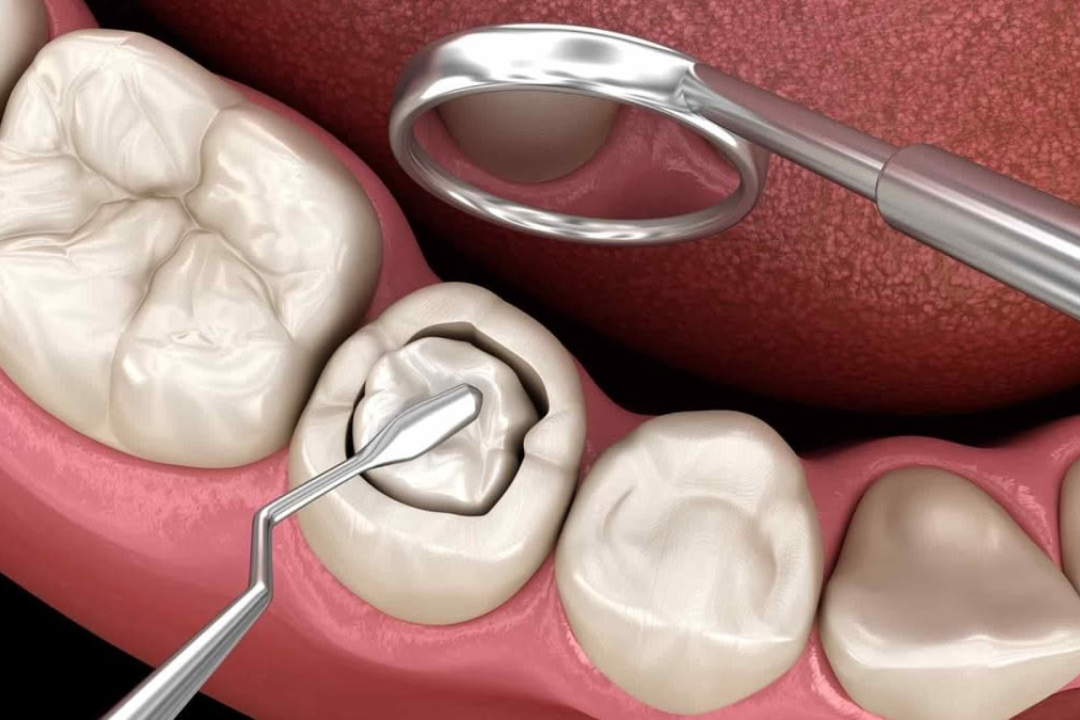
Dental Filling in Anna Nagar, Madurai
Restore Your Tooth Before a Cavity Gets Worse
A cavity can begin quietly. You may notice mild sensitivity when drinking something cold, pain after eating sweets, or food repeatedly getting stuck between your teeth. Sometimes, there may be no symptoms at all.
A dental filling is used to restore a tooth after decay has created a cavity or when certain minor areas of tooth damage need repair.
The treatment involves removing the affected tooth structure and restoring the space with an appropriate filling material. The aim is to remove the decay, restore the tooth’s shape and function, and preserve as much healthy natural tooth structure as possible.
If you are considering Dental Filling in Anna Nagar, Madurai, the important question is not simply whether a tooth has a cavity. It is whether the tooth can be safely and effectively restored with a filling or whether it requires more extensive treatment.
What Is a Dental Filling?
A dental filling is a restoration placed inside a tooth after decayed or damaged tooth structure has been removed.
A filling can be used for certain:
- Cavities caused by tooth decay
- Small areas of tooth damage
- Minor chips
- Defects in the tooth surface
- Worn areas that are suitable for restoration
The filling replaces the lost portion of the tooth and helps restore its normal shape.
The dentist may consider the size, depth and location of the cavity, the amount of healthy tooth structure remaining and the forces placed on the tooth before choosing the restoration.
When Do You Need a Dental Filling?
You may need a dental filling when tooth decay has progressed enough to create a cavity that can be restored.
Common reasons to have a tooth checked include:
- Sensitivity to cold
- Sensitivity to hot foods or drinks
- Pain when eating sweets
- Food getting trapped in one area
- A visible hole or cavity
- A dark or unusual area on a tooth
- A rough tooth surface
- A chipped area
- Pain when biting
- Occasional toothache
However, pain is not required for a cavity to be present.
A dentist may discover decay during a routine examination before you notice any symptoms.
How Does a Cavity Form?
Tooth decay develops when bacteria in dental plaque produce acids that gradually damage the tooth.
Over time, the affected area can lose mineral and become weakened. If the decay progresses far enough, a cavity can develop.
Once an established cavity requires restorative treatment, the dentist removes the affected tooth structure and restores the resulting space.
The progression can be broadly understood as:
Plaque and bacteria → Acid attack → Tooth structure weakens → Cavity develops → Restoration may be required
The exact progression differs between teeth and patients, which is why an examination is important.
What Are the Signs You Need a Filling?
A cavity can produce different symptoms depending on its size and location.
Tooth Sensitivity
You may feel a short, sharp sensation when consuming cold, hot or sweet foods.
Food Getting Stuck
A cavity can create an irregular surface or space where food repeatedly becomes trapped.
Visible Hole
A cavity may sometimes be visible as a small hole or defect.
Tooth Discoloration
Brown, black or other changes in appearance can sometimes occur with decay, although discoloration alone does not confirm a cavity.
Toothache
As decay progresses, discomfort may become more noticeable.
Pain When Biting
Pain while biting can have several causes, including decay, cracks or problems with an existing restoration.
No Symptoms
Some cavities cause no noticeable symptoms and are found during a dental examination.
Can a Filling Save Your Tooth?
A filling can restore a tooth when the damage is limited enough and sufficient healthy tooth structure remains.
The objective is to remove the affected portion and restore the tooth without unnecessarily removing healthy structure.
However, a filling cannot save every severely damaged tooth.
If decay has progressed deeply and affected the pulp, the tooth may require root canal treatment. If substantial tooth structure has been lost, a crown or another restoration may be needed.
The condition of the tooth determines the appropriate treatment.
What Types of Dental Fillings Are Available?
Several restorative materials can be used for dental fillings.
Common options include:
- Composite resin
- Amalgam
- Glass ionomer and related materials
The choice is not based on appearance alone.
The dentist may consider:
- Location of the tooth
- Size of the cavity
- Depth of decay
- Amount of remaining tooth structure
- Chewing forces
- Aesthetic requirements
- Clinical conditions
A material that is appropriate for one tooth may not be the best choice for another.
What Are Tooth-Coloured Fillings?
Tooth-coloured fillings, commonly made from composite resin, are designed to blend more closely with the surrounding natural tooth.
They can be particularly useful when the restoration is visible during smiling or speaking.
Potential advantages include:
- Natural-looking appearance
- Shade matching
- Ability to restore certain front and back teeth
- Conservative restoration of suitable cavities
The material still needs to be appropriate for the specific tooth and cavity.
When Is a Tooth-Coloured Filling Suitable?
A tooth-coloured composite filling may be considered when the cavity and tooth are suitable for adhesive restoration.
The dentist may look at:
- Cavity size
- Cavity depth
- Tooth location
- Remaining tooth structure
- Moisture control
- Bite forces
- Aesthetic requirements
For example, the requirements for a small cavity on a front tooth can differ considerably from those for a large cavity on a molar.
Can Front Teeth Be Filled?
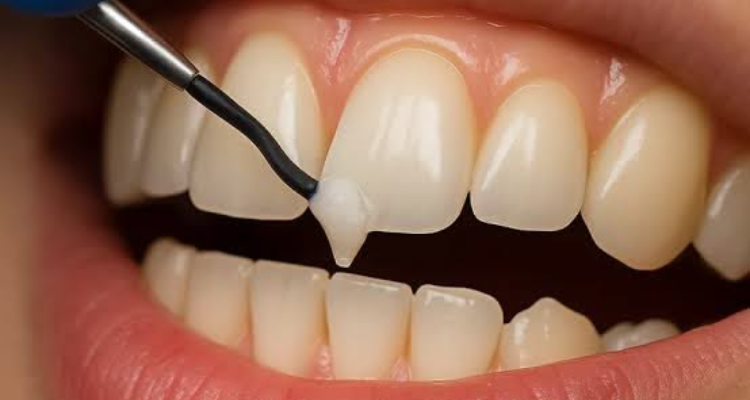
Yes. Suitable cavities and certain minor defects on front teeth can be restored with tooth-coloured fillings.
Because front teeth are highly visible, the restoration may need particular attention to:
- Colour
- Shape
- Contour
- Tooth proportions
- Surface appearance
- Transition between the natural tooth and restoration
A well-selected tooth-coloured material can provide a more natural-looking result when the tooth is suitable for this type of restoration.
Can Back Teeth Be Filled?
Yes. Back teeth can often be restored with fillings when the cavity is suitable.
However, molars and premolars experience significant chewing forces.
The dentist may therefore consider:
- Cavity size
- Depth of decay
- Remaining tooth structure
- Tooth anatomy
- Bite
- Functional load
- Restorative material
If a large portion of a back tooth has been lost, a filling may not provide enough structural protection and another restoration may need to be considered.
Does the Size of the Cavity Matter?
Yes.
The size of the cavity can influence whether a filling is appropriate.
Small Cavity
A small cavity with adequate surrounding healthy tooth structure may often be suitable for a filling.
Larger Cavity
A larger cavity requires closer assessment of the remaining tooth structure and chewing forces.
Extensive Damage
If a significant portion of the tooth has been lost, a filling may not provide sufficient strength or coverage.
In such cases, an onlay, crown or another restoration may be considered.
Can a Filling Repair a Chipped or Damaged Tooth?
Sometimes.
A small chip or localized defect may be repaired with composite resin when the tooth is otherwise suitable.
However, not every damaged tooth should be treated with a filling.
The dentist may need to determine whether:
- The tooth is cracked
- The damage extends below the visible surface
- The pulp is affected
- The remaining tooth structure is strong enough
- The tooth can withstand normal biting forces
A deeper crack or extensive structural damage may require a different treatment.
Filling or Root Canal: Which Do You Need?
A dental filling and root canal treatment address different problems.
A Filling
A filling restores tooth structure lost through decay or certain types of damage when the pulp does not require root canal treatment.
Root Canal Treatment
Root canal treatment is used when disease or damage has affected the dental pulp and the tooth requires treatment inside its root canal system.
Why Does This Matter?
A deeply decayed tooth may look like it simply needs a filling.
But if the decay has reached the pulp, placing a filling alone may not address the underlying problem.
Symptoms such as persistent toothache, prolonged sensitivity, spontaneous pain or pain associated with a deeply damaged tooth require professional assessment.
Filling or Crown: Which Is Better for Your Tooth?
A filling replaces a portion of missing tooth structure.
A crown provides coverage over a substantially damaged tooth.
A Filling May Be Suitable When:
- The cavity is relatively limited
- Enough healthy tooth structure remains
- The tooth can be restored predictably
A Crown May Be Considered When:
- A substantial amount of tooth structure is missing
- The tooth has been weakened significantly
- Greater protection is needed
- A large filling would not provide adequate support
A crown is not automatically better than a filling. The appropriate restoration depends on the condition of the individual tooth.
When Do You Need More Than a Filling?
A filling may not be enough when:
- Decay has reached the pulp
- A large amount of tooth structure has been lost
- The tooth has a significant crack
- Remaining tooth walls are weak
- The tooth requires greater structural protection
- The restoration would be exposed to excessive functional forces
Depending on the diagnosis, treatment may involve:
Root canal treatment
when the pulp is affected.
Crown or onlay
when significant tooth structure has been lost but the tooth remains restorable.
Extraction and tooth replacement
when the tooth cannot be predictably restored.
What Are the Benefits of Dental Fillings?
When a tooth is suitable for filling treatment, a filling can provide several benefits.
Removes Decayed Tooth Structure
The affected portion of the tooth is removed before the cavity is restored.
Restores the Tooth
The filling replaces lost structure and helps recreate the tooth’s shape.
Supports Chewing
Restoring the chewing surface can help the tooth return to normal function.
Preserves Natural Tooth Structure
A filling can often restore a suitable cavity without covering the entire tooth.
Can Improve Appearance
Tooth-coloured fillings can provide an aesthetic option for appropriate restorations.
What Are the Limitations of Dental Fillings?
A filling is not suitable for every type of tooth damage.
A different treatment may be needed when:
- Decay is extremely deep
- The pulp is affected
- A large portion of the tooth is missing
- The tooth is severely cracked
- The remaining structure is too weak
- The restoration cannot withstand the functional demands
In these situations, treatment may involve root canal therapy, a crown, an onlay or extraction with subsequent tooth replacement, depending on the diagnosis.
Why Should You Treat a Cavity Early?
Once a significant cavity has developed, the lost tooth structure does not grow back.
If decay continues, it can move deeper into the tooth and potentially involve the pulp.
The treatment pathway can become more complex:
Cavity → Deeper decay → Possible pulp involvement → More extensive restoration
This does not mean every untreated cavity will progress at the same rate, but delaying assessment can allow the problem to become more difficult to treat.
Early diagnosis gives the dentist an opportunity to determine whether a relatively conservative restoration is still appropriate.
What Happens If a Cavity Is Left Untreated?
An untreated cavity can continue to destroy tooth structure.
As the decay progresses, possible problems include:
- Increasing sensitivity
- Toothache
- Pain while biting
- Food trapping
- Pulp inflammation
- Dental infection
- Loss of substantial tooth structure
Treatment may then progress from a filling to more extensive procedures such as root canal treatment and crown restoration.
If the tooth becomes severely compromised, extraction may eventually be necessary.
Can a Filling Reverse Tooth Decay?
No.
A filling does not reverse the biological process of tooth decay.
When a cavity has developed and restorative treatment is required, the dentist removes the affected tooth structure and restores the resulting defect.
Very early enamel changes may sometimes be managed with preventive care before a true cavity forms. Once a substantial cavity exists, however, professional restorative treatment is generally required.
Can a Filling Treat Tooth Sensitivity?
Sometimes, but only when the sensitivity is caused by a condition that can be addressed with a filling.
Sensitivity can have several causes, including:
- Tooth decay
- Worn enamel
- Gum recession
- Exposed root surfaces
- Cracked teeth
- Existing restorations
- Other dental conditions
Therefore, sensitivity alone does not automatically mean that you need a filling.
The cause should be identified before treatment.
Can Children and Adults Get Dental Fillings?
Yes. Both children and adults can require dental fillings.
The treatment approach can differ according to:
- Age
- Tooth type
- Depth of decay
- Stage of tooth development
- Condition of the tooth
- Long-term prognosis
For children, timely management of decay can help protect the affected tooth and support healthy oral development.
Adults may also require assessment of old fillings, existing restorations and other dental problems before treatment.
Why Do You Need a Dental Check-Up Before a Filling?
A cavity seen on the surface does not always reveal the complete condition of the tooth.
An examination can help determine:
- Whether decay is present
- How extensive it is
- How deep it may be
- Whether the pulp could be affected
- How much healthy tooth structure remains
- Whether a filling is suitable
- Whether a crown, root canal or another treatment is more appropriate
Where necessary, dental X-rays or other diagnostic methods may be used to evaluate areas that cannot be fully assessed by visual examination.
This helps ensure that the treatment addresses the actual condition of the tooth rather than only the visible cavity.
What Happens During a Dental Filling?
A dental filling is usually a straightforward restorative procedure when the cavity is suitable for filling treatment.
The treatment generally involves:
- Examining the affected tooth
- Numbing the area when required
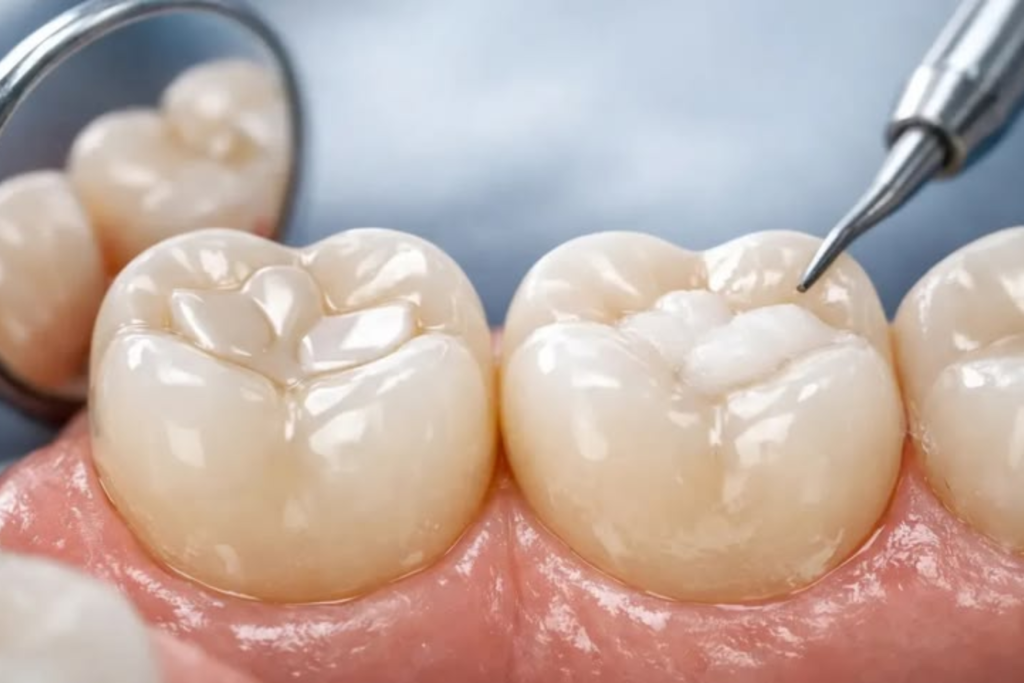
- Removing the decayed portion
- Cleaning and preparing the cavity
- Placing the selected filling material
- Shaping the restoration
- Checking the bite
The exact steps can vary according to the location, depth and size of the cavity.
How Is a Cavity Diagnosed?
A cavity is not always obvious from the outside.
The dentist may assess the tooth through:
- Visual examination
- Dental instruments
- Symptoms and dental history
- Assessment of the surrounding teeth
- Dental X-rays when indicated
X-rays can be useful when decay is suspected in areas that cannot be fully examined visually, such as between teeth.
The purpose of diagnosis is to determine whether decay is present, how extensive it is and whether a filling is actually the right treatment.
What Happens Before a Dental Filling?
Before placing a filling, the dentist needs to establish that the tooth is suitable for restorative treatment.
The assessment may consider:
- Location of the cavity
- Size and depth of decay
- Remaining healthy tooth structure
- Condition of the pulp
- Gum health around the tooth
- Existing fillings or restorations
- Bite and chewing forces
If the decay is deep or the tooth is significantly weakened, the treatment may need to change from a simple filling to another restorative approach.
Does Getting a Dental Filling Hurt?
Many patients are concerned about pain during filling treatment.
When necessary, local anaesthesia can numb the area being treated, helping reduce discomfort during the procedure.
You may still notice:
- Pressure
- Vibration
- Movement
- Sounds from dental instruments
These sensations are different from pain.
If you are uncomfortable during treatment, tell the dentist so the procedure can be adjusted appropriately.
How Is Local Anaesthesia Used During a Filling?
Local anaesthesia temporarily numbs the area around the tooth being treated.
The dentist may recommend it depending on:
- Depth of the cavity
- Tooth involved
- Sensitivity
- Expected treatment requirements
- Individual comfort
After treatment, the numbness can remain for a period of time.
Care should be taken while eating or drinking until normal sensation returns, particularly to avoid accidentally biting the cheek, lip or tongue.
How Long Does a Dental Filling Take?
The time required depends on the tooth and the extent of the restoration.
A small cavity may require less treatment time than a large or complicated restoration.
Factors that can influence the appointment include:
- Number of teeth being treated
- Size of the cavity
- Depth of decay
- Tooth location
- Type of filling material
- Need for local anaesthesia
- Complexity of the restoration
Your dentist can give you a more accurate expectation after examining the tooth.
What Happens After a Dental Filling?
Once the filling has been placed, the dentist checks the restoration and may assess your bite.
The restored tooth may feel different temporarily.
You may notice:
- Mild sensitivity
- Awareness of the filling
- Slight difference when biting
- Temporary numbness if anaesthesia was used
These sensations can occur during the adjustment period.
However, persistent or worsening pain should be evaluated, particularly if the tooth becomes painful when biting or develops prolonged sensitivity.
Can You Eat After a Dental Filling?
Whether you should eat immediately depends on the treatment and whether local anaesthesia has been used.
If your mouth is still numb, it is generally safer to wait until normal sensation returns before eating to avoid accidentally biting your cheek or tongue.
Once you can eat normally, follow any specific instructions provided by your dentist.
If the restoration feels high or uncomfortable when you bite, have it checked rather than attempting to adjust to it yourself.
Why Is My Tooth Sensitive After a Filling?
Some sensitivity can occur after a filling.
Possible factors include:
- The depth of the original cavity
- Irritation of the tooth after treatment
- The type and location of the restoration
- The tooth's response to treatment
Mild sensitivity may settle as the tooth recovers.
However, persistent, severe or increasing sensitivity should not be ignored.
Particularly concerning symptoms include:
- Prolonged pain after hot or cold
- Spontaneous toothache
- Increasing pain
- Pain that interrupts sleep
- Significant pain when biting
These symptoms may indicate that the tooth needs further assessment.
Why Does My Filled Tooth Hurt?
Pain after a filling can have different causes.
A dentist may need to determine whether the discomfort is related to:
- Temporary post-treatment sensitivity
- A bite that needs adjustment
- Deep decay
- Pulp irritation
- A crack
- Problems with the restoration
If pain continues or becomes worse, returning for an examination is important.
A filling should not simply be assumed to be the cause without identifying what is happening inside or around the tooth.
What If a Filling Falls Out?
If a filling comes out, the tooth may be left with an exposed cavity or weakened area.
Until you can have the tooth assessed:
- Keep the area clean
- Avoid repeatedly touching it
- Avoid chewing hard foods directly on the affected tooth
- Arrange a dental appointment
The dentist can determine whether the filling can be replaced or whether the tooth has developed another problem requiring different treatment.
A replacement filling may not always be the correct solution if the tooth has subsequently fractured or developed extensive decay.
How Long Do Dental Fillings Last?
There is no fixed lifespan that applies to every filling.
Longevity can depend on:
- Filling material
- Size of the restoration
- Location of the tooth
- Chewing forces
- Oral hygiene
- Diet
- Tooth condition
- Whether new decay develops around the restoration
A small filling in one tooth may behave differently from a large restoration in a heavily loaded molar.
Regular dental examinations can help identify wear or problems before the restoration fails completely.
When Does a Filling Need Replacement?
A filling may need to be replaced when it becomes:
- Cracked
- Broken
- Worn
- Loose
- Discoloured in a clinically concerning way
- Associated with recurrent decay
- No longer capable of adequately restoring the tooth
A dentist may also recommend replacement if the surrounding tooth has changed.
Importantly, an old filling does not automatically need replacement simply because it has been present for many years. Its condition and the condition of the tooth should be evaluated.
How Should You Care for a Filled Tooth?
A filled tooth still needs the same basic oral-health care as your other teeth.
Maintain:
- Regular brushing
- Cleaning between the teeth
- Appropriate fluoride exposure
- Regular dental examinations
- A tooth-friendly eating pattern
A filling repairs the existing cavity, but it does not make the tooth immune to future decay.
New decay can develop around an existing restoration if plaque and dietary factors continue to contribute to tooth decay.
Can You Get a Cavity Under a Filling?
A new cavity can develop around the edges of an existing restoration.
This may happen if:
- New decay develops near the restoration
- The filling has deteriorated
- The tooth structure around it becomes compromised
- Food and plaque accumulate around a defective restoration
Regular examinations help identify these changes.
If a filling becomes damaged or develops leakage or recurrent decay, the dentist can determine whether it should be repaired, replaced or whether the tooth requires a different restoration.
Can a Dental Filling Prevent Future Cavities?
A filling treats an existing cavity; it does not prevent new cavities from developing elsewhere.
Future cavities can still occur because of factors such as:
- Plaque accumulation
- Frequent sugar exposure
- Inadequate cleaning
- Reduced fluoride exposure
- Dry mouth
- Individual susceptibility to decay
Preventive care is therefore essential after restorative treatment.
What Affects Dental Filling Cost?
The cost of a dental filling can vary between patients.
Factors may include:
- Number of teeth requiring treatment
- Size of the cavity
- Depth of decay
- Tooth location
- Filling material
- Complexity of the restoration
- Additional diagnostic procedures
- Whether other treatment is required
A small restoration and an extensive restoration should not be expected to have the same treatment cost.
An examination is necessary to provide an individualized estimate.
How Much Does Dental Filling Cost in Anna Nagar, Madurai?
There is no single price that accurately represents every dental filling.
The final cost can depend on the type of material, size and location of the cavity, complexity of treatment and condition of the tooth.
If a tooth requires root canal treatment, a crown or another restoration instead of a simple filling, the overall treatment cost will naturally be different.
A dental assessment provides a more accurate basis for discussing treatment and cost.
How Can You Prevent More Cavities?
A filling repairs a tooth that has already been affected by decay. Preventing the next cavity requires ongoing care.
Helpful measures include:
Brush Regularly
Clean your teeth thoroughly using an appropriate fluoride toothpaste.
Clean Between Your Teeth
Interdental cleaning helps remove plaque and food from areas a toothbrush may not reach effectively.
Reduce Frequent Sugar Exposure
Repeated exposure to sugary foods and drinks can increase the risk of tooth decay.
Attend Dental Check-Ups
Regular examinations can identify early decay and other dental problems.
Address Early Symptoms
Do not wait for severe pain before having persistent sensitivity, food trapping or visible tooth changes examined.
What Happens If You Ignore a Dental Filling Problem?
A damaged or failed filling can leave the underlying tooth vulnerable.
If you notice that a filling has:
- Fallen out
- Cracked
- Become painful
- Developed a sharp edge
- Feels different when biting
- Is associated with sensitivity
The tooth should be assessed.
Delaying treatment can allow further damage or decay to develop and may turn a relatively straightforward restoration into a more extensive procedure.
Meet Dr. Amritha Lenin
Dr. Amritha Lenin is an Orthodontist and Aesthetic Dentist associated with Dr. Amritha’s Dentistry.
Her professional profile includes BDS, MDS in Orthodontics, Fellowship in Advanced Aesthetic Dentistry (FAAD), Advanced Laser Dentistry training, and Digital Smile Design & Facial Aesthetics training.
Her professional information also describes experience in general dentistry and specialized orthodontic practice.
For restorative dental care, the important consideration is to identify the condition of the affected tooth and determine whether a filling is sufficient or whether the tooth requires another form of treatment.
Why Choose Dr. Amritha’s Dentistry for Dental Fillings?
Treatment Based on the Condition of Your Tooth
A cavity is not treated simply because a dark spot or hole is visible.
The tooth can be assessed for:
- Extent of decay
- Remaining healthy structure
- Pulp involvement
- Existing restorations
- Tooth location
- Bite and functional demands
This helps determine whether a filling is appropriate.
Focus on Preserving Natural Tooth Structure
When a tooth can be predictably restored with a filling, the objective is to address the damaged area while retaining as much healthy tooth structure as reasonably possible.
Tooth-Coloured Restorative Options
Where clinically appropriate, tooth-coloured composite materials can be considered, particularly when maintaining the natural appearance of the tooth is important.
Treatment Beyond the Filling
If the tooth has deeper decay or more extensive structural damage, simply placing a filling may not be enough.
Depending on the diagnosis, treatment may involve:
- Root canal treatment
- Crown
- Onlay
- Other restorative treatment
- Extraction and tooth replacement when the tooth cannot be predictably restored
Attention to Both Function and Appearance
A restoration needs to function during normal biting and chewing while also fitting appropriately within the smile.
How Does a Filling Help Preserve Your Natural Tooth?
When decay has created a cavity, the damaged tooth structure cannot simply be left untreated.
If the remaining tooth is suitable for restoration, a filling can replace the lost portion without requiring full coverage of the tooth.
This can be particularly useful when:
- The cavity is limited
- Adequate healthy tooth structure remains
- The pulp is not affected
- The tooth can support the restoration
The aim is to restore the tooth while avoiding unnecessary removal of healthy structure.
What Happens If Tooth Decay Is Left Untreated?
A cavity can continue to enlarge if the underlying decay is not addressed.
As more tooth structure is lost, the treatment may become increasingly complex.
A possible progression is:
Cavity → Deeper decay → Pulp involvement → Root canal treatment → Further restoration
If extensive structural damage occurs, the tooth may eventually become difficult or impossible to restore predictably.
This is why a small cavity should not be ignored simply because it does not currently hurt.
How Do You Know If Decay Has Reached the Nerve?
The dental pulp, sometimes called the nerve of the tooth, contains nerves and blood vessels.
When decay approaches or affects the pulp, symptoms can become more significant.
Possible warning signs include:
- Persistent toothache
- Spontaneous pain
- Prolonged sensitivity to hot or cold
- Pain that wakes you at night
- Increasing pain
- Pain associated with a deeply damaged tooth
However, symptoms alone cannot reliably determine the condition of the pulp.
A dental examination is required to determine whether the tooth can receive a filling or needs root canal treatment.
Can a Filling Protect a Weak Tooth?
A filling can restore lost tooth structure, but it does not automatically make a severely weakened tooth strong.
If a large portion of the tooth has been lost, the remaining walls may be unable to withstand normal chewing forces.
In such cases, a dentist may consider whether an onlay or crown would provide more appropriate protection.
The size of the restoration should therefore be considered alongside the strength of the remaining natural tooth.
Why Are Old Fillings Sometimes Replaced?
A filling may remain functional for many years, but restorations can eventually develop problems.
Replacement may be considered if the filling:
- Has fractured
- Has become loose
- Is significantly worn
- Has developed recurrent decay around it
- No longer adequately restores the tooth
- Is associated with symptoms
- Has contributed to further structural damage
An old filling does not automatically need replacement because of its age.
Its condition and the condition of the tooth should be assessed first.
Can a New Cavity Form Around an Existing Filling?
Yes.
A filling does not make the surrounding tooth permanently resistant to decay.
New decay can develop around a restoration if plaque, bacteria and other risk factors continue to affect the tooth.
Possible contributing factors include:
- Inadequate plaque control
- Frequent sugar exposure
- Poor cleaning around the restoration
- Defective or deteriorating restorations
- Individual susceptibility to tooth decay
Regular dental examinations can help identify changes around existing fillings.
What Should You Do If a Filling Falls Out?
A lost filling should be professionally assessed.
The exposed tooth may be more vulnerable to:
- Food trapping
- Sensitivity
- Further damage
- Additional decay
Until the tooth is examined, keep the area clean and avoid placing excessive chewing pressure on it.
The dentist may determine that the filling can be replaced.
However, if the tooth has fractured or developed significant additional decay, another treatment may be more appropriate.
Can Dental Fillings Improve the Appearance of Teeth?
Yes, particularly when a tooth-coloured restoration is appropriate.
Composite fillings can be matched to the appearance of the surrounding tooth and shaped to restore its contour.
This can be useful for:
- Visible cavities
- Certain front-tooth defects
- Small chips
- Localized areas of tooth damage
The final result depends on the original tooth, shade, restoration size, tooth condition and individual characteristics.
Why Does a Filled Tooth Sometimes Feel Different?
After treatment, you may temporarily notice that the restored tooth feels different from the surrounding teeth.
You may experience:
- Mild sensitivity
- Awareness of the filling
- A different sensation when biting
- Temporary numbness following anaesthesia
If the filling feels unusually high when you close your teeth together, or if significant pain continues, the tooth should be assessed.
A small bite adjustment may sometimes be required.
Can Dental Fillings Help Prevent Root Canal Treatment?
A filling cannot guarantee that root canal treatment will never be needed.
However, treating a suitable cavity before decay progresses deeply can prevent further loss of tooth structure and may help avoid progression to pulp involvement.
If decay has already reached the pulp, root canal treatment may be necessary even if a filling would have been appropriate at an earlier stage.
This is one reason why early assessment of cavities matters.
What Can Cause a Filling to Fail?
Several factors can affect the long-term performance of a filling.
These can include:
- Large restoration size
- Heavy biting forces
- Tooth fracture
- New decay
- Wear
- Poor oral hygiene
- Frequent sugar exposure
- Changes in the surrounding tooth structure
A filling is part of the tooth, but the natural tooth around it remains vulnerable to future problems.
How Can You Protect a Tooth After a Filling?
A successful restoration still requires ongoing care.
Brush Regularly
Use an appropriate fluoride toothpaste and maintain thorough brushing.
Clean Between Your Teeth
Interdental cleaning helps remove plaque from areas a toothbrush cannot reach effectively.
Reduce Frequent Sugar Exposure
Repeated exposure to sugary foods and drinks increases the risk of further decay.
Attend Regular Dental Examinations
Professional examinations can identify recurrent decay, worn fillings or other problems early.
Treat New Symptoms Promptly
Persistent sensitivity, pain, food trapping or a broken filling should be assessed rather than ignored.
When Does a Filling Need Further Treatment?
A filling may not be the final treatment when the underlying tooth problem is more extensive than initially expected.
Further treatment may be considered if:
- Decay has progressed into the pulp
- The tooth has fractured
- A large amount of tooth structure has been lost
- The filling repeatedly fails
- The tooth cannot withstand normal biting forces
- Infection has developed
Depending on the condition, the next step could involve root canal treatment, crown restoration, onlay treatment or extraction.
What Treatment Is Needed If the Tooth Is Badly Damaged?
The treatment depends on whether the tooth is still restorable.
If the tooth is restorable
A combination such as root canal treatment and a crown may be considered when the pulp is affected and substantial tooth structure has been lost.
If the tooth has significant but localized structural loss
An onlay or crown may provide more appropriate coverage than a conventional filling.
If the tooth cannot be predictably restored
Extraction may be considered, followed by discussion of suitable tooth-replacement options.
The decision should be based on clinical examination rather than the appearance of the tooth alone.
Dental Fillings and Preventive Dental Care
A filling treats the tooth that already has a cavity.
It does not eliminate the factors that caused the decay.
After treatment, prevention should focus on reducing the risk of new cavities through:
- Effective daily brushing
- Interdental cleaning
- Fluoride use
- Limiting frequent sugar consumption
- Regular dental check-ups
- Prompt treatment of new dental problems
The long-term objective is not simply to keep the filling intact but to protect the natural tooth and prevent further tooth decay.
Frequently Asked Questions About Dental Fillings
A dental filling is a restoration used to replace tooth structure lost through decay or certain types of damage.
Not every early tooth change requires a filling. An established cavity may require restorative treatment, while very early enamel changes may sometimes be managed with preventive care.
Local anaesthesia can be used when appropriate to reduce discomfort during treatment. You may still feel pressure or vibration during the procedure.
Treatment time varies according to the number of teeth, cavity size, location, depth and complexity of the restoration.
Yes. Composite fillings can be used for suitable cavities and certain minor defects on front teeth where appearance is important.
Yes, when composite is clinically suitable. The size of the restoration and chewing forces need to be considered.
A filling can restore a tooth when the decay is limited and sufficient healthy tooth structure remains. Deeply infected or severely damaged teeth may require more extensive treatment.
There is no fixed lifespan. Material, restoration size, tooth location, biting forces, oral hygiene, wear and recurrent decay can all affect longevity.
Temporary sensitivity can occur after treatment. Persistent, severe or worsening sensitivity should be assessed to determine the cause.
Keep the area clean, avoid excessive pressure on the tooth and arrange a dental examination. The appropriate treatment may be replacement, repair or another restoration.
Yes. The tooth surrounding a filling can develop new decay, which is why ongoing oral hygiene and dental examinations remain important.
Neither is universally better. A filling is generally appropriate for suitable cavities with adequate remaining tooth structure, while a crown may be considered when a tooth requires greater coverage.
Root canal treatment may be necessary when decay or other damage has affected the dental pulp. The decision requires a clinical assessment.
The cost varies according to the material, size and location of the cavity, complexity of treatment and condition of the tooth. An individual examination is needed for an accurate estimate.
Maintain regular brushing with fluoride toothpaste, clean between your teeth, reduce frequent sugar exposure, and attend regular dental examinations.
Restore Damaged Teeth With Dental Fillings in Anna Nagar, Madurai
If you have tooth sensitivity, food trapping, a visible cavity, a chipped tooth or persistent discomfort, getting the tooth assessed early can help determine whether a filling is appropriate or whether it needs more extensive treatment.
At Dr. Amritha’s Dentistry, treatment can be planned according to the condition of the affected tooth, remaining healthy structure, functional requirements and aesthetic considerations.
Dr. Amritha’s Dentistry
Vaigai Colony, Anna Nagar, Madurai, Tamil Nadu – 625020
Phone: 090032 21393
Book a dental consultation to find out whether a filling is the right treatment for your tooth.
Dr. Amritha’s Dentistry
Dr. Amritha’s Dentistry,
Vaigai Colony, Anna Nagar, Madurai, Tamil Nadu – 625020
Phone: 090032 21393
Contact the clinic to schedule a consultation for dental filling in Madurai.