
Zirconia Crowns & Bridges
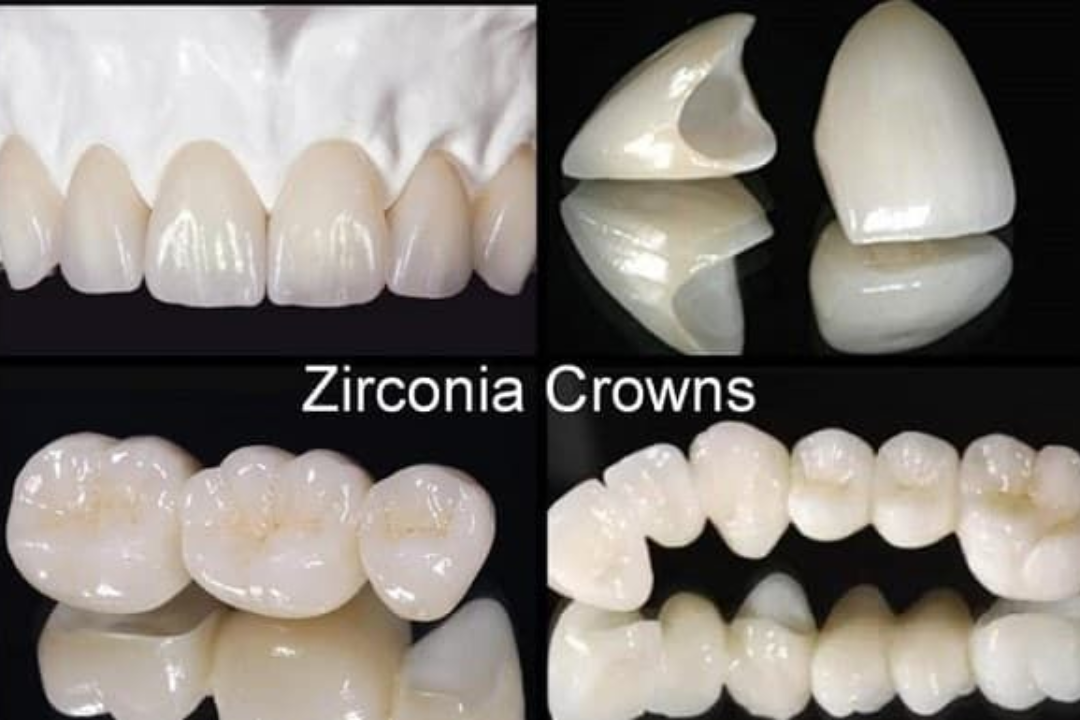
Zirconia Crowns & Bridges in Madurai
Restore Damaged, Weakened and Missing Teeth With Zirconia Restorations
A damaged, weakened or missing tooth can affect more than the appearance of your smile. Depending on the tooth involved, it may affect chewing, bite function, speech and everyday comfort.
Zirconia crowns and dental bridges are restorative dental options that can be used in appropriate cases to restore the structure, appearance and function of teeth. A crown is generally used to cover and protect a damaged or weakened tooth, while a bridge can replace one or more missing teeth using a fixed restoration.
At Dr. Amritha’s Dentistry in Vaigai Colony ,Anna Nagar, Madurai, crown and bridge treatment can be planned around the individual condition of the tooth, supporting tissues, bite, functional requirements and aesthetic expectations.
The choice of restoration should not be based on material or appearance alone. A dental examination is important to determine whether a zirconia crown, bridge, implant-supported restoration or another treatment is appropriate for the individual patient.
What Is a Dental Crown?
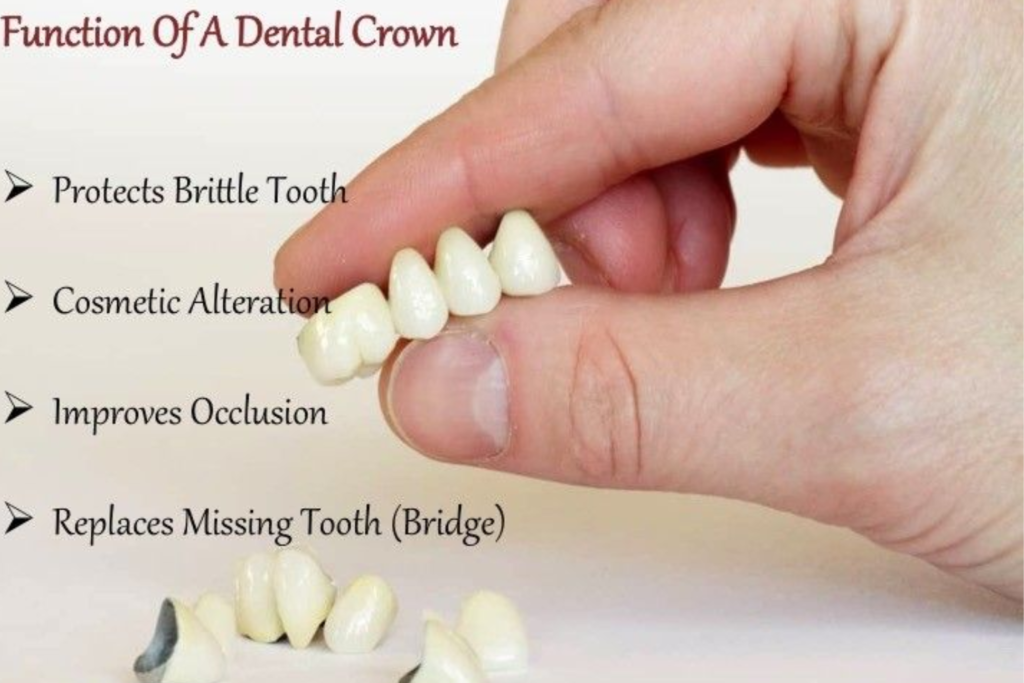
A dental crown is a custom-made restoration that covers a tooth to restore its shape, strength and function.
It is commonly called a tooth cap.
Crowns may be used for teeth that are:
- Severely damaged
- Broken
- Decayed
- Structurally weakened
- Heavily restored
- Worn down
- Previously treated with root canal therapy
A crown can also be used as part of certain bridge and implant restorations.
The purpose of a crown is not simply to make a tooth look better. Depending on the clinical situation, it can provide coverage for a weakened tooth and help restore chewing function.
What Is a Zirconia Crown?
A zirconia crown is a dental crown fabricated using zirconium dioxide, a ceramic material used in fixed dental restorations.
Zirconia is available in different formulations, and its properties can vary according to the material composition and manufacturing process. Contemporary zirconia materials are used for both single-tooth crowns and multi-unit fixed restorations, including selected bridges.
Zirconia is particularly relevant to restorative dentistry because it can provide a combination of:
- High strength
- Resistance to fracture in appropriate applications
- Tooth-coloured appearance
- Ceramic construction
Different levels of translucency depending on the zirconia formulation
The exact zirconia material should be selected according to the tooth being restored, functional requirements, aesthetics and the dentist’s treatment plan.
Why Is Zirconia Used for Dental Crowns?
Zirconia has become an established material for fixed dental restorations.
The American Dental Association describes both framework zirconia and full-contour zirconia as alternatives to some metal and porcelain-fused-to-metal restorations, with zirconia commonly used for crowns and bridges.
Strength
Zirconia has high flexural strength, although strength varies between different zirconia formulations. Some higher-translucency zirconias trade some strength for improved optical properties.
Tooth-Coloured Appearance
Unlike a conventional full-metal crown, zirconia can be fabricated in a tooth-coloured form.
Versatility
Zirconia is used in selected anterior and posterior crowns and bridges. The appropriate indication depends on the specific material and clinical situation.
Metal-Free Option
For patients who prefer a ceramic restoration without a metal substructure, zirconia may be an option when clinically suitable.
When Might You Need a Dental Crown?
A crown may be considered when a tooth has lost enough structure that additional coverage or protection is required.
Crown for a Broken Tooth
A broken tooth may need a crown when sufficient healthy tooth structure remains to support a restoration.
The dentist may evaluate:
- How much of the tooth has fractured
- Whether the tooth is restorable
- Remaining tooth structure
- Location of the tooth
- Bite forces
- Condition of the surrounding gums and supporting tissues
A severely damaged tooth may require a different treatment if a predictable crown restoration is not possible.
Crown for a Cracked or Weakened Tooth
A crack or significant structural weakness can compromise a tooth.
In selected cases, a crown may be used to cover and restore the tooth. However, not every cracked tooth is suitable for a crown.
The location and extent of the crack, remaining tooth structure and overall prognosis must be assessed before treatment.
Crown After Root Canal Treatment
A tooth that has undergone root canal treatment may require additional restoration depending on the amount of remaining tooth structure and the type of tooth involved.
Crowns are commonly used to restore selected root canal-treated teeth and provide coverage to help restore their function.
The need for a crown should therefore be assessed individually rather than assuming that every root canal-treated tooth requires exactly the same restoration.
Crown for a Tooth With a Large Filling
When a tooth has a large existing restoration, relatively little natural tooth structure may remain.
If additional protection is required, a crown may be considered.
The decision depends on:
- Remaining natural tooth structure
- Tooth location
- Functional demands
- Bite
- Overall prognosis
Crown for a Worn Tooth
Teeth can become worn because of factors such as grinding, clenching, erosion or long-term mechanical wear.
Where substantial tooth structure has been lost, restorative treatment may be considered.
However, identifying and managing the underlying cause of excessive tooth wear is also important.
What Is a Dental Bridge?
A dental bridge is a fixed dental restoration used to replace one or more missing teeth in selected situations.
A conventional dental bridge generally includes:
Abutments
The supporting teeth or structures that anchor the bridge.
Pontic
The artificial tooth that occupies the space created by the missing natural tooth.
A traditional bridge can therefore be thought of as:
Abutment → Pontic → Abutment
Different bridge designs exist, including traditional, cantilever, Maryland and implant-supported bridges. The appropriate design depends on the patient’s dental condition and treatment requirements.
How Does a Dental Bridge Replace a Missing Tooth?
When a natural tooth is lost, a gap remains in the dental arch.
A dental bridge can fill that space with an artificial tooth supported by appropriate adjacent structures.
Depending on the design, a bridge may help restore:
- Chewing function
- The appearance of the smile
- Continuity of the dental arch
- Tooth contact
- Selected aspects of bite function
The condition of the teeth adjacent to the gap is an important consideration when planning a conventional bridge. The number of missing teeth, size of the space, gum health and overall oral condition can also influence the decision.
Why Consider Replacing a Missing Tooth?
Tooth loss can have functional and aesthetic consequences.
Chewing
Missing teeth can affect chewing efficiency, particularly when several teeth are absent.
Smile Appearance
A visible gap may change the appearance of the smile.
Tooth Position
Changes can occur in the position of neighbouring teeth when a space remains.
Bite
Changes in tooth position may influence how the upper and lower teeth contact one another.
Speech
Depending on the location of the missing tooth or teeth, tooth loss can sometimes affect speech.
A dentist can evaluate whether replacement is appropriate and which treatment option best suits the patient’s circumstances.
What Is a Zirconia Bridge?
A zirconia bridge is a fixed dental bridge fabricated using zirconia.
Zirconia is used for selected multi-unit fixed restorations, including bridges. The American Dental Association notes that zirconia is commonly used for posterior and anterior fixed restorations, although material properties differ between zirconia formulations.
A zirconia bridge may offer:
- Tooth-coloured aesthetics
- Ceramic construction
- High strength in appropriate formulations
- A fixed approach to selected missing-tooth cases
However, a zirconia bridge is not automatically the right choice for every patient.
Bridge design and material selection should take into account the location of the missing teeth, supporting teeth, bite forces, span length and overall treatment objectives.
Who May Be Suitable for a Zirconia Crown?
A zirconia crown may be considered for a patient with a tooth that is:
- Structurally weakened
- Severely damaged
- Heavily restored
- Suitable for post-root-canal restoration
- Broken or worn
- Appropriate for a full-coverage restoration
The dentist first needs to determine whether the tooth is restorable and whether a crown is actually indicated.
A crown is not always the best solution for every damaged tooth. Depending on the amount of remaining tooth structure, alternatives such as an inlay, onlay or other restorative approach may sometimes be considered.
Who May Be Suitable for a Dental Bridge?
A bridge may be considered for someone who has:
- One or more missing teeth
- Suitable supporting teeth or structures
- Appropriate gum and oral health
- A dental gap that can be restored predictably
- A preference or indication for a fixed restoration
The dentist may consider:
- Number of missing teeth
- Size and location of the gap
- Condition of adjacent teeth
- Gum health
- Bite
- Patient preferences
- Alternative replacement options
A dental bridge is only one possible approach to missing-tooth replacement. Dental implants and removable prosthetic options may also be considered depending on the case.
Zirconia Crowns for Front Teeth
When restoring a front tooth, appearance becomes an important part of treatment planning.
A zirconia crown can be designed to coordinate with surrounding teeth in terms of:
- Shade
- Shape
- Size
- Contour
- Surface characteristics
The final appearance depends on multiple factors, including the zirconia formulation, tooth preparation, laboratory fabrication, surrounding teeth and clinical placement.
Higher-translucency zirconia formulations have been developed to improve optical properties, although increased translucency can be associated with different mechanical properties.
This is why the most aesthetic material on paper is not necessarily the correct material for every tooth.
Zirconia Crowns for Back Teeth
Back teeth experience substantial chewing forces.
For posterior restorations, the dentist must consider:
- Functional load
- Bite
- Tooth structure
- Restoration thickness
- Material properties
- Patient-specific risk factors
Zirconia is widely used for posterior crowns because of its strength characteristics, but different zirconia formulations have different mechanical and optical properties.
The appropriate material should therefore be selected based on the clinical requirements of the individual tooth.
Zirconia Crown vs Metal Crown
Patients often ask whether zirconia is better than a metal crown.
There is no single material that is universally best for every patient.
| Feature | Zirconia Crown | Full-Metal Crown |
|---|---|---|
| Appearance | Tooth-coloured | Metallic |
| Metal-free | Yes | No |
| Strength | High, depending on formulation | High |
| Aesthetic potential | High | Limited |
| Common consideration | Visible teeth and selected posterior cases | Selected functional situations |
| Suitability | Case dependent | Case dependent |
The appropriate choice depends on the tooth, bite, functional demands, aesthetics and overall treatment plan.
Zirconia Crown vs PFM Crown
PFM means porcelain-fused-to-metal.
PFM restorations combine a metal substructure with a porcelain outer layer.
Zirconia restorations use zirconia as the ceramic framework or restorative material.
| Feature | Zirconia | PFM |
|---|---|---|
| Metal substructure | No | Yes |
| Tooth-coloured | Yes | Yes |
| Ceramic component | Yes | Yes |
| Strength | High, material dependent | High |
| Aesthetic potential | High | High |
| Suitability | Case dependent | Case dependent |
PFM remains an established restorative option, while zirconia provides another ceramic-based alternative. Material selection should be individualized rather than based on a universal “best crown” claim.
Zirconia Crown vs E-Max Crown
Patients researching aesthetic crowns may also come across E-Max, a lithium-disilicate ceramic system.
These materials have different properties.
In broad terms:
Zirconia is associated with high strength and is available in different levels of translucency.
Lithium-disilicate ceramics generally provide strong optical properties and higher translucency than many zirconia formulations.
The American Dental Association notes that lithium-disilicate ceramics can provide higher translucency than zirconia, while zirconia offers different strength characteristics depending on its composition.
Therefore, the decision should consider:
- Tooth location
- Bite forces
- Required strength
- Aesthetic expectations
- Remaining tooth structure
- Restoration design
Can Zirconia Crowns Look Natural?
Yes. Modern zirconia restorations can be produced in tooth-coloured shades and customized to integrate with the surrounding dentition.
The appearance of a crown depends on:
- Material formulation
- Shade selection
- Tooth shape
- Tooth proportions
- Surface characteristics
- Surrounding natural teeth
- Laboratory fabrication
- Clinical placement
For a front-tooth restoration, these factors can have a significant influence on the final appearance.
A natural-looking restoration is therefore the result of material selection + treatment planning + clinical execution + laboratory work, rather than the material name alone.
Are Zirconia Crowns Only for Cosmetic Dentistry?
No.
Zirconia crowns can have a significant restorative purpose.
They may be considered for teeth that are:
- Broken
- Weakened
- Severely worn
- Heavily restored
- Appropriate for crown restoration following root canal treatment
Their tooth-coloured appearance can provide an additional aesthetic benefit.
Restorative dentistry focuses on repairing or replacing damaged or missing teeth and improving oral function, while some treatments can provide both functional and aesthetic benefits.
Are Dental Bridges Only for Cosmetic Purposes?
No.
Dental bridges are primarily used to replace missing teeth and can help restore chewing function as well as the appearance of the smile.
A bridge may also restore continuity within the dental arch.
However, the outcome and suitability depend on the individual patient’s dental condition and the design of the bridge.
What Should Be Evaluated Before Getting a Crown or Bridge?
A successful restorative plan starts with an appropriate assessment.
1. Remaining Tooth Structure
For a crown, the dentist needs to determine whether enough healthy tooth structure remains to support the restoration.
2. Gum Health
The gums and supporting tissues around the tooth or bridge should be evaluated.
3. Bite
The way the upper and lower teeth meet can influence material selection and restoration design.
4. Tooth Location
Front teeth and back teeth have different aesthetic and functional demands.
5. Supporting Teeth
For a conventional bridge, the condition of the supporting teeth is particularly important.
6. Number and Position of Missing Teeth
For a bridge, the size and location of the gap can influence which bridge design is appropriate.
7. Oral Hygiene
Good oral hygiene is important for maintaining both natural teeth and dental restorations.
8. Alternative Treatments
Depending on the circumstances, treatment alternatives may include other restorations, dental implants or removable prosthetic solutions.
Zirconia Crowns & Bridges in Anna Nagar, Madurai
For patients searching for zirconia crowns and bridges in Madurai, the underlying dental problem should be evaluated before choosing a restoration.
Someone with a structurally weakened tooth may require a crown, while someone with a missing tooth may be evaluated for a bridge, dental implant or another replacement option.
At Dr. Amritha’s Dentistry in Anna Nagar, crown and bridge treatment can be considered in relation to the patient’s individual tooth condition, oral health, bite, functional requirements and aesthetic goals.
This patient-specific approach is important because the same crown or bridge material is not necessarily suitable for every dental situation.
Crown or Bridge: Which One Do You Need?
The simplest distinction is:
A Crown
A crown generally restores or covers an individual damaged or weakened tooth.
A Bridge
A bridge generally replaces one or more missing teeth using supporting structures.
An Implant Crown
An implant crown is attached to a dental implant that replaces the root of a missing tooth.
The appropriate treatment depends on the patient’s dental condition, available supporting structures, oral health and treatment goals.
A dentist should assess these factors before recommending a specific restoration.
Zirconia Crown Treatment: From Dental Assessment to Final Placement
Choosing a zirconia crown is only one part of restorative dental treatment. Before the crown is fabricated, the tooth needs to be examined, the underlying dental problem identified and the restoration planned according to the patient’s bite, remaining tooth structure and aesthetic requirements.
For patients considering a zirconia crown in Anna Nagar, Madurai, understanding the treatment process can make it easier to know what happens before, during and after crown placement.
The exact number of appointments and treatment steps can vary depending on the condition of the tooth and the type of restoration required.
Step 1: Dental Consultation and Examination
The process begins with an assessment of the tooth and the surrounding oral structures.
The dentist may evaluate:
- Existing tooth structure
- Tooth decay or previous restorations
- Cracks or fractures
- Gum condition
- Bite and tooth contacts
- Tooth sensitivity or pain
- Previous root canal treatment
- Adjacent teeth
- Overall oral hygiene
The purpose of the examination is to determine whether the tooth can be restored predictably and whether a crown is actually the appropriate treatment.
A crown should not be placed simply because a tooth looks damaged. The underlying cause and long-term condition of the tooth need to be considered first.
Step 2: Diagnostic Assessment
Depending on the clinical situation, additional diagnostic procedures may be required.
These may include:
- Dental X-rays
- Clinical photographs
- Bite assessment
- Evaluation of existing restorations
- Assessment of the tooth's supporting tissues
Imaging can help the dentist evaluate areas that cannot be fully assessed by visual examination alone.
For a tooth that has undergone root canal treatment, for example, the condition of the tooth and surrounding structures may need to be evaluated before deciding on the final restoration.
Step 3: Treatment Planning
Once the tooth has been assessed, the dentist can determine the most appropriate restorative approach.
Treatment planning may involve deciding between:
- A conventional filling
- An inlay or onlay
- A dental crown
- A zirconia crown
- Another ceramic restoration
Extraction and tooth replacement in cases where the tooth cannot be predictably restored
If a crown is appropriate, the choice of material can then be considered.
This is an important distinction: the decision to place a crown comes before the decision about which crown material is most appropriate.
Step 4: Selecting the Crown Material
Zirconia is one of several materials used for dental crowns.
The selection process can consider:
Tooth Location
Front and back teeth have different functional and aesthetic requirements.
Bite Forces
The amount and direction of chewing forces can influence restoration design and material selection.
Remaining Tooth Structure
The amount of healthy tooth structure remaining can affect how the tooth is prepared and restored.
Aesthetic Requirements
For visible teeth, shade, translucency, contour and the relationship with neighbouring teeth can be important.
Restoration Design
Single crowns and multi-unit restorations may have different material and design requirements.
For these reasons, a zirconia crown should be selected based on the individual tooth rather than simply choosing it because it is a popular material.
Step 5: Preparing the Tooth for a Crown
If a crown is indicated, the tooth may need to be prepared to create adequate space for the restoration.
The preparation process is designed to:
- Remove compromised tooth structure where necessary
- Create an appropriate shape for the crown
- Provide sufficient space for the selected restorative material
- Establish suitable margins
- Allow the crown to fit properly with the surrounding teeth
The amount of preparation depends on the condition of the tooth and the type of restoration being planned.
The objective is not simply to remove tooth structure. It is to create the conditions necessary for a properly designed restoration while preserving sound tooth structure wherever clinically possible.
Step 6: Managing the Gum and Crown Margin
The relationship between the crown margin and surrounding gum tissue is an important part of restorative treatment.
A well-planned crown should have an appropriate fit and contour around the tooth.
Before final placement, the dentist may evaluate:
- Crown margin
- Gum condition
- Emergence profile
- Contact with neighbouring teeth
- Cleanability
- Overall fit
Healthy gums and good oral hygiene are important for maintaining the area around a dental crown.
Step 7: Recording the Tooth for Crown Fabrication
The dental team needs an accurate representation of the prepared tooth and surrounding teeth so that the final restoration can be fabricated.
Depending on the clinic’s workflow and technology, this may involve conventional dental impressions or digital scanning.
The record can capture:
- Prepared tooth
- Adjacent teeth
- Opposing teeth
- Bite relationship
- Relevant soft-tissue areas
The information is then used to design and fabricate the restoration.
Digital scanning should only be described as part of a clinic’s treatment process when that technology is actually available at the clinic.
Step 8: Designing the Zirconia Crown
The crown needs to be designed to fit the prepared tooth and function appropriately with the rest of the dentition.
Important design considerations can include:
- Tooth shape
- Crown dimensions
- Contact points
- Occlusion
- Margin position
- Restoration thickness
- Shade
- Surface characteristics
- Relationship with adjacent teeth
For an anterior crown, appearance may receive greater emphasis.
For a posterior crown, functional requirements and chewing forces become particularly important.
Step 9: Fabricating the Zirconia Restoration
After the required dental records are obtained, the crown is fabricated according to the treatment plan.
Modern dental laboratories can use computer-aided design and manufacturing processes for many zirconia restorations.
The final restoration may be:
- Designed digitally
- Milled from a zirconia blank
- Sintered according to the material manufacturer's requirements
- Characterized or glazed when appropriate
- Finished and inspected before clinical placement
The exact laboratory workflow varies according to the zirconia system and restoration being fabricated.
Step 10: Temporary Protection When Required
Depending on the treatment plan, a temporary restoration may be placed while the definitive crown is being fabricated.
A temporary crown can help protect the prepared tooth and maintain function during this period.
Patients may be advised to take additional care around the temporary restoration, particularly with foods that are very hard or sticky.
The temporary restoration is not the final zirconia crown and is designed for short-term use.
Step 11: Trial and Evaluation of the Final Crown
When the definitive zirconia crown is ready, it is evaluated before final cementation.
The dentist may assess:
Fit
Does the crown seat correctly on the prepared tooth?
Margins
Are the crown margins appropriately positioned?
Contacts
Does the crown contact neighbouring teeth correctly?
Bite
Does the restoration fit appropriately into the patient’s bite?
Appearance
Does the colour, shape and contour meet the planned aesthetic requirements?
If adjustments are required, they can be addressed before final placement.
Step 12: Final Placement of the Zirconia Crown
Once the restoration has been evaluated and found clinically appropriate, it can be permanently cemented or bonded according to the restoration and material requirements.
The dentist will ensure that the crown is properly seated and that the bite is acceptable.
The final restoration should function as part of the patient’s existing dentition rather than feeling like an isolated object on the tooth.
What Does a Zirconia Crown Feel Like After Placement?
A newly placed crown can feel slightly different at first because the tooth has a new surface and contour.
Some patients may notice:
- Awareness of the new crown
- Mild sensitivity
- A slightly different bite sensation
- Temporary gum sensitivity
These sensations can settle as the patient becomes accustomed to the restoration.
However, persistent pain, significant sensitivity, swelling or a bite that feels noticeably high should be assessed by the dentist.
Eating After Getting a Zirconia Crown
The timing for eating after crown placement depends partly on the cement or bonding procedure used.
Patients should follow the specific instructions provided by their dentist.
After the restoration has been fully placed, a zirconia crown is designed to function during normal eating.
Nevertheless, maintaining reasonable care with extremely hard objects or habits such as biting non-food items is important for protecting both the crown and the natural teeth.
Can You Brush a Zirconia Crown?
Yes.
A zirconia crown should be cleaned as part of a normal oral-hygiene routine.
Patients should generally maintain:
- Regular tooth brushing
- Cleaning between teeth
- Professional dental check-ups
- Appropriate gum care
The crown itself cannot develop tooth decay because zirconia is not natural tooth structure. However, the natural tooth underneath and around the crown can still develop decay if oral hygiene is inadequate.
This makes plaque control particularly important.
How Do You Clean Around a Dental Bridge?
Cleaning around a dental bridge requires attention to both the supporting teeth and the area beneath the artificial tooth.
Depending on the bridge design, cleaning may involve:
- Tooth brushing
- Interdental cleaning
- Dental floss
- Specialized flossing aids
- Interdental brushes
The dentist or dental hygienist can demonstrate an appropriate cleaning technique for the specific bridge design.
Keeping the supporting teeth and surrounding tissues clean is important for the long-term maintenance of the restoration.
How Long Can a Zirconia Crown Last?
There is no single guaranteed lifespan for a zirconia crown.
The longevity of a crown can be influenced by:
- Oral hygiene
- Bite forces
- Tooth grinding or clenching
- Crown design
- Material used
- Quality of tooth preparation
- Cementation or bonding
- Condition of the underlying tooth
- Regular dental maintenance
A well-maintained crown can function for many years, but it should not be presented as a restoration with a guaranteed lifetime.
Regular dental examinations allow the dentist to monitor both the restoration and the natural tooth underneath it.
What Can Cause a Crown to Fail?
Although dental crowns are designed to provide durable restoration, problems can occur.
Potential issues may include:
- Crown fracture or chipping
- Loss of retention
- Recurrent decay around the tooth
- Gum inflammation
- Wear
- Problems related to bite forces
- Fracture of the underlying tooth
The risk varies considerably between patients.
A crown does not eliminate the possibility of future dental problems because the natural tooth and surrounding tissues remain biologically active.
What About Tooth Grinding and Zirconia Crowns?
Bruxism, commonly known as teeth grinding or clenching, can place additional forces on teeth and restorations.
Patients who grind or clench may require additional evaluation before restorative treatment.
Depending on the individual situation, the dentist may consider:
- Bite assessment
- Management of contributing factors
- Monitoring
- A protective night guard where clinically appropriate
The presence of bruxism should be considered during crown planning because excessive forces can affect both natural teeth and restorations.
Zirconia Crown Maintenance
A zirconia crown does not mean that the restored tooth no longer requires dental care.
Good maintenance includes:
Daily Oral Hygiene
Brush regularly and clean between teeth.
Regular Dental Visits
Professional examinations can help identify problems before they become more extensive.
Gum Care
Healthy gums support the long-term health of the restored area.
Avoiding Harmful Habits
Avoid using teeth to open packages or bite very hard non-food objects.
Managing Bruxism
If grinding or clenching is present, discuss appropriate management with the dentist.
Zirconia Crown Cost: What Influences the Price?
The cost of a zirconia crown can vary considerably between patients and clinics.
It may depend on factors such as:
- Tooth location
- Complexity of the case
- Amount of tooth preparation required
- Type of zirconia used
- Laboratory fabrication
- Diagnostic procedures
- Additional restorative treatment
- Temporary restoration requirements
- Number of crowns required
- Whether root canal treatment is needed
For this reason, quoting one universal price for every zirconia crown can be misleading.
A personalized treatment plan provides a more meaningful estimate.
Zirconia Crown or Dental Bridge: What Is the Difference?
A crown and a bridge solve different restorative problems.
| Restoration | Main Purpose |
|---|---|
| Zirconia Crown | Restores or covers an individual damaged or weakened tooth |
| Dental Bridge | Replaces selected missing teeth using a fixed restoration |
| Implant Crown | Replaces the visible portion of a missing tooth over a dental implant |
| Removable Prosthesis | Replaces missing teeth with a removable restoration |
The most appropriate treatment depends on the patient’s dental condition rather than simply choosing the restoration with the most appealing material.
Zirconia Crown or Dental Implant?
These treatments are sometimes confused because both can be used in tooth replacement, but they address different situations.
Zirconia Crown on a Natural Tooth
A crown restores an existing natural tooth that has sufficient structure and a suitable prognosis.
Implant-Supported Crown
An implant-supported crown replaces the visible portion of a missing tooth after an implant has been placed to serve as the supporting structure.
Therefore, a zirconia crown does not replace the root of a missing natural tooth.
When a tooth is absent, the dentist may need to evaluate whether a bridge, dental implant or another replacement option is more appropriate.
What If a Tooth Cannot Support a Crown?
Not every damaged tooth can be restored with a crown.
If insufficient healthy tooth structure remains, or if the tooth has an unfavorable prognosis, the dentist may discuss alternative treatment.
Depending on the situation, options may include:
- Additional restorative treatment
- Root canal treatment where indicated
- Extraction
- Dental implant replacement
- Dental bridge
- Removable prosthetic replacement
The appropriate option depends on the individual diagnosis.
Caring for Zirconia Crowns and Bridges in Anna Nagar
For patients receiving restorative treatment in Anna Nagar, Madurai, long-term care extends beyond the day the crown or bridge is fitted.
The restoration should be treated as part of the patient’s overall oral health.
Maintaining healthy gums, cleaning around the restoration, protecting against excessive bite forces and attending regular dental reviews can all contribute to maintaining the restored area.
At Dr. Amritha’s Dentistry, the appropriate maintenance approach can be discussed according to the type of restoration, the patient’s oral-health condition and individual risk factors.
When Should You Contact Your Dentist After Crown Placement?
A patient should seek professional assessment if a newly placed crown or bridge is associated with symptoms such as:
- Persistent or worsening pain
- Significant sensitivity
- Swelling
- Bleeding or persistent gum irritation
- A crown that feels loose
- A bridge that moves
- A bite that feels unusually high
- Fracture or visible damage
- Difficulty chewing that does not settle
Prompt assessment can help identify whether the issue relates to the restoration, underlying tooth or surrounding tissues.
The Main Point About Zirconia Crown Treatment
A successful zirconia crown is not determined by the material alone.
The overall result depends on a combination of:
- Accurate diagnosis
- Appropriate treatment planning
- Suitable tooth preparation
- Correct material selection
- Accurate fabrication
- Proper fit
- Appropriate cementation or bonding
- Good oral hygiene
- Long-term maintenance
For this reason, choosing a zirconia crown in Anna Nagar, Madurai should begin with an assessment of the individual tooth and the patient’s broader dental needs.
The goal is not simply to place a zirconia crown. The goal is to determine whether a crown is appropriate, select a suitable restorative approach and maintain the health and function of the tooth over time.
Meet Dr. Amritha Lenin
Choosing a dental restoration is an important clinical decision, particularly when the treatment involves a visible tooth or a tooth that plays an important role in chewing.
Dr. Amritha Lenin is an orthodontist and aesthetic dentist with a professional focus that includes orthodontics, aesthetic dentistry, digital smile design and laser dentistry.
According to her professional profile, she has seven years of experience in general dentistry, including more than three years of specialized experience in orthodontics.
Her professional background includes education at Chettinad Dental College and Research Institute and a Fellowship in Advanced Aesthetic Dentistry (FAAD). Her listed certifications and areas of advanced training include:
- Advanced Laser Dentistry
- Digital Smile Design
- Facial Aesthetics
- Orthodontics
- Aesthetic Dentistry
- Invisalign and clear-aligner treatment
- Metal and invisible braces
This combination of general dental experience, orthodontic specialization and aesthetic-focused training can be relevant when treatment planning needs to consider both oral function and appearance.
A Patient-Centred Approach to Restorative Treatment
A crown or bridge should be planned around the patient’s dental condition rather than around a particular material alone.
During treatment planning, factors such as the patient’s existing teeth, bite, oral health, aesthetic expectations and long-term maintenance requirements can be considered.
This approach helps answer the more important question:
“Which restoration is appropriate for my tooth?”
rather than simply:
“Which crown material should I choose?”
For some patients, zirconia may be an appropriate restorative material. For others, another restoration or a different tooth-replacement approach may be more suitable.
What Should You Discuss During Your Dental Consultation?
Patients considering restorative treatment can make their consultation more useful by discussing their concerns and expectations openly.
Useful questions include:
- Is my tooth suitable for a crown?
- Does the tooth require root canal treatment first?
- How much healthy tooth structure remains?
- Is zirconia appropriate for this particular tooth?
- What alternatives are available?
- How will the restoration affect my bite?
- What maintenance will the restoration require?
- Are there any factors that could affect its longevity?
- What is included in the treatment plan?
Would a bridge or implant be more appropriate for a missing tooth?
Understanding the reasoning behind a treatment recommendation can help patients make informed decisions.
Is Zirconia Right for Every Patient?
No.
Although zirconia is a widely used restorative material, material selection is not identical for every patient or every tooth.
The decision may depend on:
- Location of the tooth
- Amount of remaining tooth structure
- Bite
- Functional forces
- Aesthetic requirements
- Restoration design
- Gum condition
- Existing dental treatment
- Overall treatment objectives
A consultation is therefore more valuable than choosing a material based only on online comparisons.
Choosing a Dental Clinic in Anna Nagar, Madurai
For patients comparing options for Zirconia Crowns & Bridges in Madurai, the material should be only one part of the decision.
It can be useful to consider:
Clinical Assessment
Does the clinic evaluate the underlying dental problem before recommending a restoration?
Dentist's Expertise
Does the treating dentist have relevant training and experience for the proposed treatment?
Treatment Planning
Are functional, biological and aesthetic factors considered together?
Restoration Quality
Is the restoration fabricated according to an appropriate clinical and laboratory process?
Follow-Up
Is there a plan for reviewing the restoration after treatment?
Communication
Are treatment alternatives, limitations, maintenance requirements and expected outcomes explained clearly?
For patients in and around Anna Nagar, Madurai, these considerations can help make the decision more informed.
Why the Diagnosis Comes Before the Restoration
A crown is a treatment, not a diagnosis.
If a tooth is painful, cracked, heavily decayed or structurally compromised, the underlying cause needs to be identified before deciding how the tooth should be restored.
Similarly, if a tooth is missing, the dentist needs to evaluate the surrounding teeth, available space, gum condition, bite and overall oral health before selecting a replacement option.
This diagnostic-first approach helps prevent patients from choosing a restoration simply because it is advertised as a popular or premium material.
Zirconia Crowns & Bridges: Making an Informed Decision
There is no single restoration that is ideal for every dental situation.
The right decision may depend on a combination of:
- Diagnosis
- Tooth condition
- Gum health
- Bite
- Functional requirements
- Aesthetic expectations
- Available treatment options
- Long-term maintenance
For this reason, patients should view online information as a starting point rather than a substitute for an individual dental examination.
Frequently Asked Questions About Zirconia Crowns & Bridges
A zirconia crown is a tooth-coloured dental restoration made using zirconium dioxide ceramic. It can be used to restore selected damaged or weakened teeth when a full-coverage restoration is clinically appropriate.
Zirconia can be used for selected front-tooth restorations. The specific zirconia formulation, translucency, shade, tooth position and aesthetic requirements should be considered before treatment.
Zirconia is commonly used for selected posterior crowns because of its strength characteristics. The appropriate material depends on the tooth, bite and functional requirements.
A zirconia crown generally restores an individual tooth, whereas a zirconia bridge is designed to replace one or more missing teeth using supporting structures.
A crown may be recommended for a suitable root-canal-treated tooth when additional coverage or protection is required. The need depends on the remaining tooth structure and the individual clinical situation.
The treatment timeline varies according to the condition of the tooth, diagnostic requirements, preparation, laboratory fabrication and the type of restoration being provided. Your dentist can provide a case-specific timeline.
The procedure is performed with appropriate local anaesthesia when tooth preparation is required. Some patients may experience temporary sensitivity or awareness after treatment, but persistent or significant discomfort should be evaluated by the dentist.
Once the definitive restoration has been properly placed and the dentist's post-treatment instructions have been followed, a zirconia crown is designed to function during normal eating. Excessive biting forces and harmful habits should still be avoided.
Zirconia itself cannot develop tooth decay because it is not natural tooth structure. However, the natural tooth around or underneath the restoration can still develop decay, making good oral hygiene important.
Clean the crown as you would the rest of your teeth, with regular brushing and appropriate interdental cleaning. Your dentist can recommend the most suitable cleaning method for your individual restoration.
The area beneath the artificial tooth needs special attention because normal brushing may not reach every surface. Depending on the bridge design, flossing aids or interdental cleaning devices may be recommended.
Neither material is universally better. Zirconia provides a tooth-coloured ceramic option, while full-metal crowns have different material characteristics. The choice should be based on the tooth, functional requirements, aesthetics and clinical circumstances.
Not in every situation. Zirconia and lithium-disilicate ceramics have different optical and mechanical characteristics. The appropriate choice depends on factors such as tooth location, required strength, aesthetics and restoration design.
There is no guaranteed lifespan. Longevity can be influenced by oral hygiene, bite forces, grinding or clenching, restoration design, the underlying tooth, maintenance and other patient-specific factors.
Patients looking for Zirconia Crowns & Bridges in Madurai can consider a dental consultation at Dr. Amritha's Dentistry in Anna Nagar, Madurai, where the appropriate restoration can be assessed according to the individual dental condition and treatment objectives.
Ready to Discuss Your Dental Restoration?
If you have a damaged tooth, a heavily restored tooth or a missing tooth and are considering a zirconia restoration, the first step is an individual dental assessment.
At Dr. Amritha’s Dentistry, Anna Nagar, Madurai, you can discuss your dental concern, available treatment options and whether a zirconia crown or bridge is appropriate for your situation.
Book a dental consultation to discuss your treatment options and find the restoration suited to your individual needs.
Dr. Amritha’s Dentistry
Vaigai Colony ,Anna Nagar, Madurai, Tamil Nadu 625020
Phone: 090032 21393
Dr. Amritha’s Dentistry
Dr. Amritha’s Dentistry,
Vaigai Colony, Anna Nagar, Madurai, Tamil Nadu – 625020
Phone: 090032 21393
Contact the clinic to schedule a consultation for zirconia crowns and bridges in Madurai.