
Invisalign / Clear Aligners in Madurai
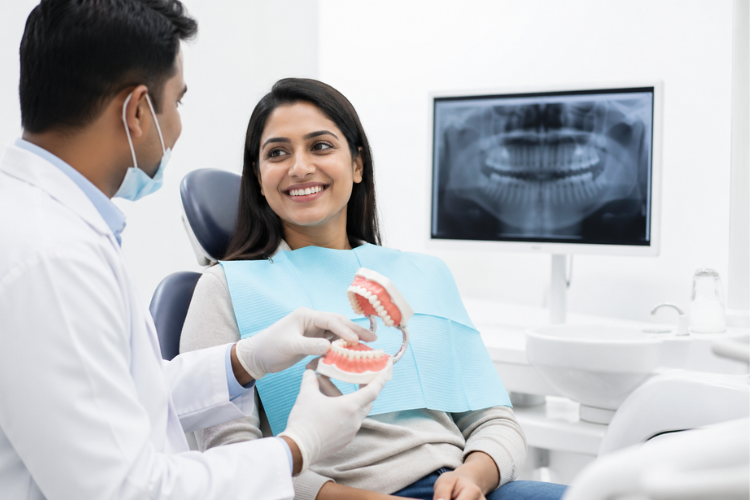
Invisalign / Clear Aligners in Madurai
Discreet Teeth Straightening with Personalised Orthodontic Care
Are crooked, crowded or unevenly spaced teeth affecting the way you smile? Invisalign and clear aligners may offer a discreet way to improve tooth alignment without traditional metal braces.
At Dr. Amritha’s Dentistry in Vaigai Colony, Anna Nagar, Madurai, clear-aligner treatment is provided as part of orthodontic and aesthetic dental care. The clinic identifies Dr. Amritha L as an Orthodontist and Certified Invisalign Provider, with a focus on orthodontics, aesthetic dentistry and smile transformation.
Clear aligners are transparent, removable orthodontic trays designed to gradually move teeth according to an individualized treatment plan. Depending on the patient’s dental condition, they may be used for concerns such as crowding, crooked teeth, spacing and selected bite problems.
If you are searching for an Invisalign dentist in Madurai or a clear aligner dentist in Anna Nagar, the first step is an orthodontic consultation to determine whether aligner treatment is appropriate for your teeth and bite.
What Are Clear Aligners?
Clear aligners are removable, transparent orthodontic appliances designed to gradually move teeth into planned positions.
Unlike conventional braces, which use fixed brackets and wires, clear aligners use a series of customized trays.
Each stage of treatment is designed to make controlled changes to tooth position. As treatment progresses, patients move through their planned sequence of aligners under orthodontic supervision.
Clear aligners may be considered for:
- Crowded teeth
- Crooked teeth
- Gaps between teeth
- Certain bite irregularities
- Selected orthodontic relapse cases
- Some aesthetic alignment concerns
However, clear aligners are not suitable for every orthodontic problem.
The complexity of the tooth movement, bite relationship, dental health and supporting tissues all need to be evaluated before treatment is recommended.
What Is Invisalign?
Invisalign is a branded clear-aligner system used for orthodontic tooth movement.
The term clear aligners refers to the broader category of transparent removable orthodontic appliances, whereas Invisalign refers to a specific branded system.
This distinction matters when patients search online because terms such as:
- Invisalign
- Clear aligners
- Invisible braces
- Teeth aligners
- Transparent aligners
may be used to describe related orthodontic solutions, but they do not necessarily refer to exactly the same product or treatment system.
If you are considering Invisalign in Madurai, the important question is not simply whether a particular aligner brand is available. Your orthodontist should first determine what type of tooth movement and bite correction you actually need.
Invisalign vs Clear Aligners: What’s the Difference?
| Term | What it means |
|---|---|
| Clear aligners | General category of transparent removable orthodontic appliances |
| Invisalign | A specific branded clear-aligner system |
| Invisible braces | Common patient-facing term for discreet orthodontic treatment |
| Orthodontic aligners | General term for aligner-based orthodontic treatment |
Therefore, every Invisalign treatment involves clear aligners, but not every clear aligner is Invisalign.
Who Can Get Clear Aligners?
Clear aligners may be suitable for adults, teenagers and other patients depending on their dental development and orthodontic requirements.
They may be considered when the patient has:
- Mild to moderate tooth crowding
- Crooked or misaligned teeth
- Spaces between teeth
- Certain bite problems
- Selected cases of orthodontic relapse
- A desire for a more discreet orthodontic appliance
However, being interested in Invisalign does not automatically mean you are a candidate.
During an orthodontic assessment, the dentist or orthodontist needs to understand:
- Your current tooth positions
- Your bite
- The severity of the problem
- Required tooth movements
- Gum and supporting-tissue health
- Your treatment objectives
- Your ability to follow aligner-wear instructions
Only after this assessment can an appropriate treatment approach be recommended.
What Dental Problems Can Clear Aligners Treat?
Clear aligners can be used for several types of orthodontic concerns, depending on the individual case.
1. Crowded Teeth
Crowded teeth occur when there is insufficient space for teeth to align normally.
Depending on the severity and underlying cause, clear aligners may be used to gradually reposition crowded teeth.
Treatment planning may consider:
- Degree of crowding
- Available space
- Tooth position
- Tooth rotation
- Bite relationship
- Required movement
If you are searching for clear aligners for crowded teeth in Madurai, an orthodontic assessment can determine whether aligner treatment is appropriate.
Clear Aligners for Crooked Teeth
Crooked or misaligned teeth are among the common reasons people explore orthodontic treatment.
Clear aligners may be able to gradually reposition certain crooked teeth according to a planned sequence of movements.
The appropriate treatment depends on:
- Which teeth are affected
- The severity of the misalignment
- The direction of movement required
- The overall bite
- Supporting dental structures
Rather than choosing treatment based solely on appearance, orthodontic diagnosis should guide the treatment plan.
Clear Aligners for Gap Teeth
Gaps between teeth are also known as spacing.
Clear aligners may be used to close selected spaces between teeth when orthodontic movement is appropriate.
However, the cause of the gap is important.
Spacing can be associated with different dental or developmental factors, so an orthodontist needs to assess the underlying situation before treatment.
If you are looking for Invisalign for gap teeth in Madurai, consultation is the best way to understand whether aligners can address your specific spacing concern.
Can Invisalign Fix an Overbite?
Some overbite cases can be managed with clear-aligner treatment, depending on the nature and severity of the bite problem.
An overbite involves the relationship between the upper and lower front teeth.
Treatment planning may consider:
- Degree of overbite
- Position of the upper teeth
- Position of the lower teeth
- Jaw relationship
- Tooth movement required
Not every overbite should be treated in exactly the same way, which is why an orthodontic examination is essential.
Can Clear Aligners Fix an Underbite?
Some selected underbite cases may be considered for aligner-based orthodontic treatment.
However, the underlying cause and severity of an underbite can vary considerably.
The orthodontist may need to evaluate:
- Tooth positions
- Bite relationship
- Jaw relationship
- Severity
- Required orthodontic movements
More complex cases may require an alternative or combined treatment approach.
Can Clear Aligners Correct Crossbite?
A crossbite occurs when one or more teeth do not come together in the expected relationship between the upper and lower arches.
Certain crossbite cases may be treated with clear aligners.
Whether aligners are appropriate depends on the location, severity and underlying cause of the crossbite.
An orthodontic evaluation is therefore important before deciding on Invisalign or another clear-aligner system.
Can Clear Aligners Treat an Open Bite?
An open bite occurs when certain upper and lower teeth do not meet properly when the mouth is closed.
Some selected open-bite cases can be managed using clear-aligner treatment.
The orthodontist needs to assess:
- The extent of the open bite
- Tooth position
- Bite pattern
- Required movements
- Underlying contributing factors
The treatment approach should be individualized rather than based solely on the visible appearance of the teeth.
Benefits of Clear Aligners
For suitable patients, clear aligners can offer several practical and aesthetic advantages.
Discreet appearance
Clear aligners are designed to be less noticeable than conventional metal braces.
Removable
They can be removed according to the treatment instructions, which can make eating and routine oral hygiene more convenient.
Digital treatment planning
Modern clear-aligner treatment can incorporate digital records and treatment planning.
No fixed brackets
Clear aligners do not require conventional brackets and archwires.
Lifestyle convenience
For some patients, their removable nature can make orthodontic treatment easier to integrate into daily routines.
However, clear aligners also require consistent patient cooperation. The benefits depend on appropriate case selection and following the orthodontist’s instructions.
Clear Aligners for Adults in Madurai
Many adults consider orthodontic treatment but hesitate because they do not want visible metal braces.
For suitable cases, clear aligners can provide a more discreet approach to improving tooth alignment.
Adults may consider clear aligners for:
- Crowded teeth
- Crooked teeth
- Gaps
- Selected bite problems
- Smile alignment
- Relapse after previous orthodontic treatment
Clear aligners can be particularly appealing to people who want their orthodontic treatment to fit around professional and social commitments.
However, adults should not choose aligners purely because they are discreet. The treatment needs to be clinically appropriate for the required tooth movements.
Clear Aligners for Teenagers
Teenagers may also be candidates for clear-aligner treatment depending on their dental development and orthodontic needs.
The orthodontist may consider:
- Stage of dental development
- Type of orthodontic problem
- Treatment complexity
- Oral hygiene
- Ability to follow wear instructions
- Expected compliance
For teenagers, consistent aligner use is particularly important because the treatment depends on following the prescribed wear schedule.
Parents and teenagers can discuss the available orthodontic options during the consultation before deciding between aligners and braces.
Are Clear Aligners Right for You?
A simple way to think about it is:
Your dental problem → Orthodontic assessment → Treatment options → Personalized plan
Not:
“I want Invisalign → therefore Invisalign must be suitable.”
An orthodontist needs to determine whether the planned tooth movements can be achieved appropriately with clear aligners.
During consultation, you can discuss:
- Your main concern
- Desired smile changes
- Alignment problems
- Bite concerns
- Treatment options
- Expected treatment duration
- Cost considerations
- Retention after treatment
This patient-first approach helps ensure that the treatment is selected for your dental needs, not simply because a particular treatment is currently popular.
How Does Clear Aligner Treatment Work?
Clear aligner treatment uses a planned series of transparent trays to gradually move teeth toward their intended positions.
The treatment is not simply about wearing a set of plastic trays. It involves orthodontic diagnosis, treatment planning, controlled tooth movement and regular monitoring.
A typical treatment journey includes the following stages.
Step 1: Initial Orthodontic Consultation
The first step is a consultation with an orthodontist.
During this appointment, your dental and orthodontic concerns can be discussed, including:
- Crooked teeth
- Crowding
- Gaps
- Bite concerns
- Previous braces or orthodontic treatment
- Smile-related concerns
- Your expectations from treatment
The orthodontist will assess whether clear aligners are appropriate for your particular condition.
Step 2: Dental and Orthodontic Assessment
Before starting aligner treatment, your teeth and bite need to be assessed.
Depending on the case, the assessment may involve:
- Clinical examination
- Digital dental records
- Intraoral scanning
- Dental imaging where clinically indicated
- Evaluation of tooth positions
- Assessment of the bite
- Assessment of the supporting dental tissues
This helps establish the starting point for treatment planning.
Step 3: Digital Intraoral Scanning
Digital scanning can be an important part of modern orthodontic workflows.
Dr. Amritha’s Dentistry lists the 3Shape TRIOS 3 intraoral scanner among its technology.
An intraoral scanner can create a digital representation of the patient’s teeth, which can support:
- Digital dental records
- Orthodontic assessment
- Treatment planning
- Monitoring
- Communication about planned tooth movement
Digital scanning can also eliminate the need for some traditional physical impression procedures, depending on the clinical workflow.
Step 4: Treatment Planning
Once the orthodontic records have been collected, the required tooth movements can be planned.
The orthodontist considers factors such as:
- Current tooth positions
- Crowding
- Spacing
- Tooth rotations
- Bite relationship
- Required movement
- Treatment objectives
- Overall dental health
The objective is to create a treatment plan that is appropriate for the patient’s individual orthodontic needs.
Step 5: Customized Aligners
Once the treatment plan is established, the aligners are produced according to the planned sequence.
Each aligner is designed to fit the teeth and contribute to the planned progression of tooth movement.
Patients then move through the aligner sequence according to their orthodontist’s instructions.
Step 6: Wearing the Aligners
Clear aligners are removable, but that does not mean they can be worn only occasionally.
Consistent wear according to the orthodontist’s instructions is an important part of successful aligner treatment.
You may need to remove your aligners for certain activities, such as eating and cleaning your teeth, and then reinsert them as instructed.
The exact wear schedule should always come from your treating orthodontist.
Step 7: Regular Orthodontic Monitoring
Clear aligner treatment requires professional monitoring.
During follow-up appointments, your orthodontist can evaluate:
- Tooth movement
- Aligner fit
- Treatment progress
- Oral hygiene
- Any discomfort or concerns
- Whether additional adjustments are required
This allows the treatment plan to be assessed as treatment progresses.
Step 8: Refinements When Required
Not every orthodontic treatment progresses in exactly the same way.
In some cases, additional aligners or refinement stages may be required to achieve the planned result.
The need for refinement can depend on:
- Treatment complexity
- Tooth movement
- Patient compliance
- Biological response
- Aligner fit
- Treatment progress
Refinement should therefore be considered a possible part of treatment rather than assuming every patient will follow an identical timeline.
Step 9: Retention After Treatment
Completing active aligner treatment is not necessarily the end of orthodontic care.
Retainers may be recommended after treatment to help maintain the corrected position of the teeth.
Your orthodontist will explain:
- Type of retainer
- Wearing schedule
- Cleaning
- Maintenance
- Follow-up requirements
Retention is an important part of maintaining orthodontic results over time.
What Technology Supports Clear Aligner Treatment at Dr. Amritha’s Dentistry?
Modern orthodontic treatment can combine clinical expertise with digital technology.
Dr. Amritha’s Dentistry lists several technologies relevant to digital dental and orthodontic care.
3Shape TRIOS 3 Intraoral Scanner
The clinic lists 3Shape TRIOS 3 for digital impressions and scanning.
For orthodontic workflows, digital scans can help create detailed digital records of the teeth and support treatment planning.
NewTom OPG & Cephalometric Imaging
The clinic also lists NewTom OPG and cephalometric imaging.
These imaging technologies can assist with dental and orthodontic assessment when clinically indicated.
Why does digital technology matter?
The technology itself is not the treatment.
Instead:
Clinical examination + orthodontic expertise + digital records + treatment planning + monitoring
work together to support individualized care.
How Long Does Invisalign Treatment Take?
Quick answer:
There is no fixed Invisalign treatment duration that applies to every patient.
The treatment timeline depends on the complexity of the orthodontic problem and the movements required.
Factors can include:
- Degree of crowding
- Amount of spacing
- Tooth rotations
- Bite correction
- Number of teeth involved
- Complexity of tooth movement
- Patient compliance
- Treatment response
- Refinements
A patient with minor alignment concerns may have a different treatment timeline from someone requiring more extensive orthodontic correction.
Therefore, an orthodontic consultation is the most appropriate way to understand your expected treatment duration.
How Many Hours a Day Should You Wear Clear Aligners?
Clear aligners need to be worn according to your orthodontist’s prescribed schedule.
Because aligners work through a planned sequence of tooth movements, inconsistent wear can affect treatment progression.
Your orthodontist will explain:
- Recommended daily wear
- When to remove the aligners
- When to change to the next aligner
- How to store them
- What to do if an aligner is lost
- What to do if an aligner no longer fits properly
Remember:
Removable does not mean optional.
Clear-aligner treatment depends on following the prescribed treatment plan consistently.
Are Clear Aligners Painful?
Quick answer:
Clear aligners can cause temporary pressure, tightness or mild discomfort, particularly when beginning a new aligner.
This can happen because the aligner is designed to apply controlled forces to the teeth.
The level of discomfort varies between patients.
If you experience:
- Severe pain
- Persistent pain
- Significant gum irritation
- A sharp edge causing injury
- An aligner that does not fit properly
contact your orthodontist for advice.
Can You Eat While Wearing Invisalign?
Clear aligners are generally removed before eating.
A simple routine is:
Remove aligners → Eat → Clean your teeth → Clean/rinse aligners appropriately → Reinsert
Removing the aligners during meals can also make eating more convenient compared with fixed orthodontic appliances.
Your orthodontist should provide specific instructions for your particular aligner system.
Can You Drink With Clear Aligners?
The safest approach is to follow your orthodontist’s instructions regarding what you can consume while wearing the aligners.
In general, patients should be careful about consuming beverages other than water while the aligners are in place.
Food particles or liquids trapped between the teeth and aligner can affect oral hygiene.
If you are unsure whether a particular drink is appropriate, ask your orthodontist.
How Do You Clean Clear Aligners?
Keeping your aligners clean is an important part of treatment.
A simple routine includes:
1. Remove the aligners before eating
This reduces exposure to food particles.
2. Rinse appropriately
Rinse your aligners according to your orthodontist’s instructions.
3. Clean the aligners correctly
Use the cleaning method recommended for your aligner system.
4. Maintain oral hygiene
Continue regular brushing and flossing.
5. Store the aligners safely
When you remove them, keep them in their case rather than placing them on random surfaces.
Avoid inappropriate heat
Hot water or excessive heat may affect the shape of an aligner.
If you are unsure about a particular cleaning product or method, ask your orthodontist before using it.
What Happens If You Lose a Clear Aligner?
If you lose an aligner, do not simply guess which aligner you should wear next.
Contact your orthodontist and explain what happened.
Depending on where you are in the treatment sequence, your orthodontist may recommend an appropriate next step.
This is one reason keeping your aligner case with you can be useful.
Invisalign vs Traditional Braces
One of the most common questions patients ask is:
“Should I choose Invisalign or braces?”
There is no universal answer.
Both are orthodontic treatment approaches, but they work differently and may be appropriate for different clinical situations.
| Feature | Invisalign / Clear Aligners | Traditional Braces |
|---|---|---|
| Appearance | More discreet | More visible |
| Removable | Yes | No |
| Eating | Usually removed during meals | Remain attached |
| Oral hygiene | Aligners can be removed | Cleaning around brackets requires additional care |
| Compliance | Requires consistent patient wear | Fixed to teeth |
| Brackets/wires | No conventional brackets and wires | Uses brackets and wires |
| Treatment suitability | Depends on individual case | Can treat a broad range of orthodontic problems |
| Monitoring | Required | Required |
| Retention | Usually required | Usually required |
Invisalign vs Braces: Which Is Better?
The honest answer:
Neither Invisalign nor traditional braces is automatically better for every patient.
The appropriate treatment depends on:
- Orthodontic diagnosis
- Complexity of the case
- Required tooth movements
- Bite
- Patient age and dental development
- Lifestyle
- Treatment expectations
- Ability to follow instructions
An orthodontist can compare the options after evaluating your teeth and bite.
Clear Aligners vs Braces for Adults
Adults often prefer clear aligners because they are less noticeable than conventional metal braces.
This can be useful for patients who want orthodontic treatment while maintaining a more discreet appearance at work or during social activities.
However, aesthetic preference should not be the only deciding factor.
The first question should always be:
Can the chosen treatment appropriately address the orthodontic problem?
How Much Do Invisalign & Clear Aligners Cost in Madurai?
Quick answer:
There is no single fixed price for every Invisalign or clear-aligner treatment.
The total cost can vary according to the individual’s treatment requirements.
Factors that may influence the cost include:
- Complexity of tooth alignment
- Degree of crowding
- Degree of spacing
- Bite correction
- Number of aligners
- Treatment duration
- Refinements
- Retainers
- Additional dental procedures, if required
This is why online “starting prices” may not accurately represent the cost of your complete treatment.
What Determines the Cost of Clear Aligners?
Two patients may both search for “clear aligner cost in Madurai” but receive different treatment plans.
For example:
Patient A
Has relatively minor spacing and requires limited tooth movement.
Patient B
Has significant crowding and requires more extensive tooth and bite correction.
Their treatment requirements may therefore differ.
A proper consultation allows the orthodontist to explain:
- Recommended treatment
- Expected stages
- Approximate duration
- Number/type of aligners
- Refinements if required
- Retention
- Overall treatment cost
Are Clear Aligners Worth It?
Whether clear aligners are worth choosing depends on your individual needs and priorities.
They may appeal to suitable patients because they offer:
- A discreet appearance
- Removability
- Convenient meal-time removal
- Access for routine oral hygiene
- Digital treatment planning
- An alternative to conventional fixed braces
However, they also require patient commitment.
If a patient does not consistently follow the prescribed wear schedule, treatment may not progress as planned.
So the better question is not:
“Are Invisalign aligners worth it?”
but:
“Are clear aligners appropriate for my orthodontic problem and lifestyle?”
That is a question your orthodontist can answer after examination.
Can Clear Aligners Be Used After Previous Braces?
Some patients experience movement of their teeth after completing previous orthodontic treatment.
In selected cases, clear aligners may be considered for orthodontic relapse.
However, the appropriate treatment depends on:
- Current tooth position
- Degree of relapse
- Bite
- Previous treatment
- Required tooth movement
- Retention history
An orthodontic assessment is necessary before deciding whether aligners are suitable.
What Happens If an Aligner Does Not Fit?
If an aligner suddenly feels very tight, does not seat correctly or appears significantly different from previous aligners, don’t force it into position.
Possible reasons can include:
- Incorrect aligner sequence
- Insufficient wear of previous aligner
- Tooth movement not progressing as expected
- Lost or damaged aligner
- Changes in the treatment plan
Contact your orthodontist for appropriate guidance.
What Happens After You Finish Invisalign?
Finishing the active aligner sequence is an important milestone, but teeth can naturally move after orthodontic treatment.
This is why retention matters.
Your orthodontist may provide a retainer and explain:
- When to wear it
- How to clean it
- How to store it
- How frequently it should be replaced
- When follow-up is required
The goal of retention is to help maintain the tooth positions achieved during active orthodontic treatment.
Your Clear Aligner Journey at Dr. Amritha’s Dentistry
The overall process can be understood as:
Consultation
↓
Orthodontic Assessment
↓
Digital Records / Scanning
↓
Treatment Planning
↓
Customized Aligners
↓
Regular Wear
↓
Orthodontic Monitoring
↓
Refinement if Required
↓
Final Alignment
↓
Retention
This approach connects the doctor’s orthodontic expertise, digital technology and individualized treatment planning rather than presenting clear aligners as simply a cosmetic product.
Why Choose Dr. Amritha’s Dentistry for Invisalign & Clear Aligners in Madurai?
Choosing an orthodontic provider is about more than finding a clinic that offers clear aligners. The quality of your treatment depends on proper diagnosis, treatment planning, clinical monitoring and appropriate follow-up.
At Dr. Amritha’s Dentistry, clear-aligner treatment is part of a broader orthodontic and aesthetic dentistry approach.
The clinic is located in Vaigai Colony, Anna Nagar, Madurai, and its website identifies Dr. Amritha L as Founder, Orthodontist and Certified Invisalign Provider.
The clinic also highlights digital dental technology, including intraoral scanning and diagnostic imaging, to support assessment and treatment planning.
Meet Dr. Amritha Lenin
Orthodontist & Aesthetic Dentist in Madurai
Dr. Amritha Lenin is an orthodontist and aesthetic dentist associated with Dr. Amritha’s Dentistry.
Her professional profile should be presented consistently across the clinic website and verified professional profiles.
Professional credentials listed by the clinic
- BDS – SRM University, Chennai
- MDS – Orthodontics – The Tamil Nadu Dr. M.G.R. Medical University
- Orthodontist
- Certified Invisalign Provider
- Certified Aesthetic Dentist
- Fellow in Advanced Aesthetic Dentistry
The clinic also highlights her interests in orthodontics, aesthetic dentistry, smile enhancement and modern digital dental treatment.
Experience
Based on the professional information provided for this website project, her experience can be presented as:
7+ years of experience in general dentistry
3+ years of specialized orthodontic experience
Important: these experience figures should be published only after the clinic confirms the dates and wording.
Why an Orthodontist Matters for Clear Aligner Treatment
Clear aligners are not simply cosmetic trays.
They are orthodontic appliances designed to produce planned tooth movements.
An orthodontist evaluates factors such as:
- Tooth alignment
- Crowding
- Spacing
- Tooth rotations
- Overbite
- Underbite
- Crossbite
- Open bite
- Overall occlusion
- Required tooth movements
This helps determine whether clear aligners are appropriate and how treatment should be planned.
The key principle:
The aligner is the appliance. The orthodontic diagnosis and treatment plan determine how it should be used.
Digital Dentistry at Dr. Amritha’s Dentistry
Modern orthodontic care can combine clinical examination with digital technology.
The clinic lists:
3Shape TRIOS 3 Intraoral Scanner
Used for digital impressions/scanning as part of the clinic’s digital workflow.
NewTom OPG & Cephalometric Imaging
Used for dental and orthodontic diagnostic assessment where clinically indicated.
Digital technology can help with:
- Creating digital dental records
- Treatment planning
- Orthodontic assessment
- Patient communication
- Monitoring treatment
The technology supports the clinician’s decision-making rather than replacing clinical assessment.
Clear Aligners in Vaigai Colony, Anna Nagar, Madurai
If you are searching for:
- Invisalign in Madurai
- Clear aligners in Madurai
- Invisalign dentist in Madurai
- Clear aligner dentist in Anna Nagar
- Invisible braces in Madurai
- Orthodontist for clear aligners in Madurai
Dr. Amritha’s Dentistry is located in:
Vaigai Colony, Anna Nagar, Madurai, Tamil Nadu – 625020.
Clear Aligner Consultation in Madurai
Not sure whether Invisalign or another clear-aligner treatment is right for you?
A consultation can help you understand your orthodontic condition and available treatment options.
During your consultation, you can discuss:
Your concern
What would you like to change about your teeth or smile?
Your orthodontic condition
Are there issues such as crowding, spacing or bite irregularities?
Treatment suitability
Can your particular tooth movements be addressed using clear aligners?
Treatment duration
How long might treatment take based on your individual case?
Treatment options
Would clear aligners, braces or another orthodontic approach be more appropriate?
Retention
What will be required after active treatment?
Your First Visit: What to Bring
If you have previously undergone orthodontic treatment, bring any relevant records you have.
It can also help to tell your orthodontist about:
- Previous braces
- Previous aligners
- Previous dental treatment
- Current concerns
- Previous retainers
- Any discomfort or dental problems
This information can help provide a more complete understanding of your dental history.
What Makes a Good Clear Aligner Treatment Plan?
A good treatment plan should be based on the patient’s individual condition.
It should consider:
Diagnosis
What is causing the alignment or bite problem?
Treatment objective
What needs to change?
Tooth movement
Which teeth need to move, and in what direction?
Appliance suitability
Can clear aligners achieve the required movements appropriately?
Monitoring
How will progress be assessed?
Refinement
Could additional aligners be required?
Retention
How will the final tooth positions be maintained?
This is why personalized orthodontic planning is more important than simply choosing a treatment because it is advertised as “invisible.”
Clear Aligners for Different Patient Goals
Patients may approach orthodontic treatment with different objectives.
“I want straighter teeth.”
Your orthodontist can assess the degree and type of misalignment.
“I have gaps between my teeth.”
The cause and location of the spacing need to be evaluated.
“My teeth are crowded.”
The amount of crowding and available space should be assessed.
“I don’t want metal braces.”
Clear aligners may be an option if clinically suitable.
“My teeth moved after braces.”
An orthodontist can assess whether this is orthodontic relapse and whether aligners are appropriate.
“I want to improve my smile.”
Smile aesthetics can be considered alongside orthodontic function and bite.
Invisalign for Smile Transformation
Clear aligner treatment can sometimes form part of a broader aesthetic dental plan.
At Dr. Amritha’s Dentistry, orthodontics is offered alongside aesthetic dental services and Digital Smile Design.
However, smile enhancement should not focus solely on appearance.
A comprehensive approach considers:
Tooth alignment + bite + dental health + facial aesthetics + patient’s goals
This can help create a treatment plan that is both functional and aesthetic.
Clear Aligners and Oral Hygiene
Maintaining oral hygiene remains important throughout orthodontic treatment.
Because aligners fit over the teeth, patients should follow their orthodontist’s instructions regarding:
- Tooth brushing
- Flossing
- Aligner cleaning
- Eating
- Drinking
- Aligner storage
- Follow-up appointments
Good daily habits can help support oral health throughout treatment.
What Should You Ask Before Starting Invisalign?
Before beginning treatment, consider asking your orthodontist:
- Am I suitable for clear aligners?
- What orthodontic problem are we treating?
- What treatment alternatives are available?
- How long is my estimated treatment?
- How often will I need appointments?
- What happens if I need refinements?
- What is included in the treatment cost?
- Will I need retainers?
- How long will I need to wear retainers?
- What should I do if an aligner is lost or damaged?
These questions can help you make an informed treatment decision.
Why Patients Should Choose Treatment Based on Diagnosis
There are many orthodontic treatments available today.
The right question is not:
“Which treatment is most popular?”
It is:
“Which treatment is appropriate for my teeth, bite and treatment goals?”
An orthodontic assessment helps answer that question.
At Dr. Amritha’s Dentistry, the combination of orthodontic expertise, digital dental technology and aesthetic dentistry can support an individualized approach to smile and alignment concerns.
Frequently Asked Questions About Invisalign & Clear Aligners in Madurai
What are clear aligners?
Clear aligners are transparent, removable orthodontic trays designed to gradually move teeth into planned positions. They can be used to address selected alignment concerns such as crowded, crooked or spaced teeth.
What is Invisalign?
Invisalign is a branded clear-aligner system used as part of orthodontic treatment. It uses a planned series of transparent aligners to gradually move teeth according to an individualized treatment plan.
Can clear aligners straighten crooked teeth?
Yes, clear aligners can correct many types of tooth misalignment. However, suitability depends on the severity of the misalignment, the required tooth movements and the patient’s overall orthodontic condition.
Can Invisalign fix crowded teeth?
Invisalign may be suitable for certain cases of crowded teeth. An orthodontic assessment is needed to determine the severity of crowding and whether the required movements can be appropriately managed with clear aligners.
Can clear aligners close gaps between teeth?
Yes, clear aligners may be used to close selected spaces between teeth. The orthodontist will assess the location and cause of the spacing before recommending an appropriate treatment approach.
Can Invisalign fix an overbite?
Some overbite cases can be treated with Invisalign or other clear aligners. The suitability of aligner treatment depends on the severity and underlying cause of the bite problem.
Are clear aligners suitable for adults?
Yes, adults can be candidates for clear-aligner treatment when their teeth and orthodontic condition are suitable. Clear aligners can be a discreet option for adults who want to improve tooth alignment.
Are clear aligners better than braces?
Neither clear aligners nor braces are universally better. The appropriate option depends on the patient’s orthodontic condition, required tooth movements, treatment goals, lifestyle and ability to follow the treatment plan.
How does clear aligner treatment work?
Clear aligner treatment typically involves an orthodontic consultation, dental assessment, digital records or scanning, treatment planning, customized aligners, regular wear and progress monitoring. Additional refinement aligners may be required in some cases, followed by retention after active treatment.
How long does Invisalign treatment take?
Treatment duration varies from patient to patient. The timeline depends on factors such as crowding, spacing, bite correction, complexity of tooth movement, patient compliance and treatment response.
How many hours should I wear clear aligners?
Clear aligners should be worn according to the schedule prescribed by your orthodontist. Consistent wear is important because the aligners are designed to work through a planned sequence of tooth movements.
Are clear aligners painful?
Clear aligners may cause temporary pressure, tightness or mild discomfort, particularly when starting a new aligner. If you experience significant or persistent pain, contact your orthodontist for an assessment.
How much do clear aligners cost in Madurai?
The cost of clear-aligner treatment in Madurai varies depending on the complexity of the case, number of aligners, treatment duration, refinements, retainers and individual treatment requirements. A consultation is needed to determine the appropriate treatment plan and associated cost.
Do I need retainers after Invisalign?
Retainers are commonly recommended after active orthodontic treatment to help maintain the alignment achieved. Your orthodontist will advise you about the appropriate type and wearing schedule.
How can I find out if I am suitable for Invisalign?
The best way to determine your suitability is through an orthodontic consultation. Your teeth, bite, alignment concerns and required tooth movements can be assessed before deciding whether Invisalign, another clear-aligner option or braces would be appropriate.
Book a Clear Aligner Consultation in Madurai
Thinking about Invisalign or clear aligners?
Start with an orthodontic consultation.
Discuss your:
- ✓
Tooth alignment - ✓
Crowding - ✓
Spacing - ✓
Bite - ✓
Smile concerns - ✓
Treatment options - ✓
Expected duration - ✓
Cost - ✓
Retention plan