
Root Canal Treatment

Root Canal Treatment in Madurai
Root Canal Treatment in Madurai for Infected or Damaged Teeth
A tooth can sometimes develop a serious problem beneath its outer surface even when the visible damage appears limited. Persistent toothache, prolonged sensitivity, pain while chewing, swelling or tenderness around a tooth may indicate that the tissue inside the tooth has become inflamed or infected.
Root Canal Treatment (RCT) is a dental treatment used to manage disease or damage affecting the pulp and root canal system of a tooth. When the tooth is considered restorable, treatment can remove the diseased internal tissue while allowing the natural tooth to remain.
If you are looking for Root Canal Treatment in Madurai, particularly around Anna Nagar the first step should be a proper dental examination. Tooth pain does not automatically mean that a root canal is required.
At Dr. Amritha’s Dentistry, Anna Nagar, Madurai, Tamil Nadu – 625020, patients can have the affected tooth assessed before a suitable treatment plan is recommended.
What Is Root Canal Treatment?
Root Canal Treatment, commonly known as a root canal, is a procedure that treats problems involving the soft tissue inside a tooth.
The central part of a tooth contains the dental pulp, which includes nerves, blood vessels and connective tissue. The pulp extends through the tooth and into the root canals.
A simplified structure is:
Enamel → Dentin → Pulp Chamber → Root Canals
When bacteria reach the pulp because of deep decay, cracks, trauma or other damage, the tissue may become inflamed or infected.
Root canal treatment is intended to address this internal problem while preserving the natural tooth when it has a suitable prognosis.
Why Does a Tooth Need a Root Canal?
A tooth may require RCT when the pulp has become irreversibly inflamed, infected or damaged.
Possible causes include:
- Deep dental decay
- A cracked or fractured tooth
- Dental trauma
- Repeated treatment of the same tooth
- Extensive restorations
- Injury to the pulp
- Bacterial infection inside the tooth
The cause is important because different dental conditions can produce similar symptoms.
For example, tooth sensitivity can occur for reasons that do not require root canal treatment. A proper diagnosis is therefore more reliable than trying to identify the problem from symptoms alone.
What Is Dental Pulp?
The dental pulp is the soft tissue located inside the tooth.
It contains:
- Nerves
- Blood vessels
- Connective tissue
The pulp has an important role while the tooth is developing.
If the pulp later becomes severely inflamed or infected, it may need to be removed as part of root canal treatment.
A mature tooth can continue to function after the pulp has been removed because the tooth is supported by the surrounding bone, periodontal ligament and gum tissues.
What Are Root Canals?
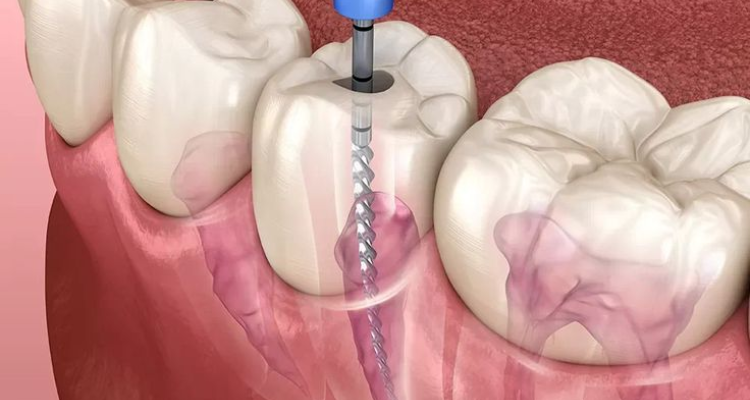
Root canals are the narrow internal passages extending from the pulp chamber toward the roots of a tooth.
Their shape and configuration are not identical in every tooth.
Depending on the tooth, the canal system may contain:
- More than one canal
- Curved canals
- Narrow canals
- Complex internal anatomy
This variation is one reason individual examination and treatment planning are important before root canal therapy.
What Causes Root Canal Infection?
Bacteria can reach the internal pulp when the protective structure of the tooth has been compromised.Common pathways include:
Deep Tooth Decay
Untreated decay can progress through the tooth toward the pulp.
Cracks and Fractures
A crack may allow bacteria to penetrate deeper into the tooth.
Dental Trauma
An injury can damage the pulp, even when the external appearance of the tooth does not immediately reveal the extent of the problem.
Repeated Dental Procedures
Multiple procedures on the same tooth can sometimes affect the pulp.
Extensive Tooth Damage
A severely damaged or heavily restored tooth may have a greater risk of developing further complications.
Symptoms That May Indicate a Root Canal Problem
A tooth requiring endodontic assessment can present with different symptoms.
Possible signs include:
Persistent Toothache
Pain that continues or repeatedly returns should be evaluated rather than managed indefinitely with home remedies.
Prolonged Hot or Cold Sensitivity
Sensitivity that continues after the source of heat or cold has been removed can be a reason for further examination.
Pain While Biting
Discomfort when chewing or applying pressure to a tooth can occur with several dental conditions, including problems involving the pulp or tissues around the root.
Swelling Around the Tooth
Swelling can be associated with dental infection and should not be ignored.
Gum Tenderness
The gum around an affected tooth may become sore or sensitive.
Tooth Discolouration
A tooth that becomes darker, particularly following trauma, may require assessment.
Gum Boil or Drainage
A small pimple-like swelling on the gum near a tooth can sometimes be associated with an infection.
These symptoms are warning signs, not a diagnosis.
Can You Need a Root Canal Without Having Tooth Pain?
Yes.
Some teeth with significant pulp damage or infection produce very little discomfort.
A problem may sometimes be identified through:
- Routine dental examination
- Dental X-ray
- Pulp testing
- Assessment of a previously injured tooth
- Examination of a tooth with swelling or other signs
Therefore, the absence of pain does not necessarily confirm that a tooth is healthy.
Does Every Toothache Mean You Need an RCT?
No.
Toothache can have many causes, including:
- Dental decay
- Cracked tooth
- Gum disease
- Tooth sensitivity
- Bite-related problems
- Pulp inflammation
- Dental infection
- Problems with an existing restoration
Some of these conditions can be managed without root canal treatment.
An examination helps distinguish between different causes and prevents unnecessary treatment.
When Is Root Canal Treatment Recommended?
RCT may be considered when the dental pulp is no longer capable of recovering normally and the tooth remains suitable for restoration.
The decision can involve:
- Symptoms
- Clinical examination
- Pulp testing
- Dental imaging
- Tooth structure
- Condition of the root
- Surrounding tissues
- Overall restorability
The dentist may use several pieces of information rather than relying on one symptom or one X-ray finding.
What Does a Restorable Tooth Mean?
A tooth may have an infected pulp but still be suitable for preservation.
However, root canal treatment is only one part of saving a tooth.
The dentist also needs to consider whether enough sound tooth structure remains to support an appropriate final restoration.
Factors that can affect restorability include:
- Extent of decay
- Remaining tooth structure
- Root condition
- Cracks or fractures
- Supporting bone
- Gum health
- Position of the tooth
- Ability to restore the tooth after RCT
If the tooth cannot be restored predictably, extraction and tooth-replacement options may need to be considered.
Root Canal Treatment or Tooth Extraction?
When a severely damaged or infected tooth is being evaluated, treatment may involve deciding between preserving the natural tooth and removing it.
Root Canal Treatment
When the tooth has a reasonable prognosis and can be restored, RCT may allow the natural tooth to remain.
Extraction
If the tooth is structurally unsuitable for predictable restoration, removal may be recommended.
The decision should be based on the condition of the individual tooth rather than assuming that every infected tooth should automatically receive a root canal.
Why Preserve a Natural Tooth When Possible?
A natural tooth is part of an interconnected dental system.
When a tooth can be treated and restored predictably, retaining it may help maintain:
- Existing tooth position
- Chewing function
- The natural dental arch
- Contact with neighbouring teeth
Removing a tooth creates a missing-tooth space that may later require consideration of replacement options such as an implant, bridge or removable prosthesis.
Natural-tooth preservation is therefore one of the considerations in restorative treatment planning.
Root Canal Treatment for Front Teeth
Front teeth can develop pulp problems because of:
- Trauma
- Deep decay
- Fractures
- Previous dental treatment
- Infection
Because these teeth are visible when smiling and speaking, their eventual restoration may also need to take appearance into consideration.
The internal root canal treatment and the final restoration are separate parts of the overall treatment plan.
Root Canal Treatment for Back Teeth
Premolars and molars can also require root canal treatment.
Back teeth experience significant chewing forces and may have complex internal anatomy.
A molar may contain multiple canals, and the exact anatomy varies between individuals.
This makes accurate assessment important when planning treatment for a posterior tooth.
Root Canal Treatment After an Injury
Dental trauma can affect the pulp even when there is no obvious external fracture.
An injured tooth may later develop changes such as:
- Pain
- Discolouration
- Sensitivity
- Swelling
- Loss of pulp vitality
The timing of these changes can vary.
For this reason, a tooth that has experienced significant trauma may require professional assessment and, in some cases, follow-up monitoring.
Can a Cracked or Broken Tooth Need a Root Canal?
It depends on the location and severity of the fracture.
The dentist may need to determine:
- How deep the crack extends
- Whether the pulp is affected
- Whether the root is involved
- How much sound tooth remains
- Whether the tooth can be restored
If the pulp is damaged and the tooth remains restorable, root canal treatment may form part of the treatment plan.
Some fractures, however, can make a tooth unsuitable for predictable preservation.
Can a Previously Root-Treated Tooth Become Infected Again?
Yes.
A tooth that has already received root canal treatment can sometimes develop further problems.
Possible reasons include:
- Persistent infection
- New bacterial contamination
- Complex canal anatomy
- New decay
- Leakage around a restoration
- Fracture
- Problems associated with the previous treatment
A previously treated tooth that develops new symptoms should be assessed rather than automatically assumed to need another standard RCT.
Depending on the findings, retreatment, surgical endodontic treatment or extraction may be considered.
What Is Root Canal Retreatment?
Root canal retreatment refers to additional endodontic treatment performed on a tooth that has already undergone root canal therapy.
It is different from treating a tooth that has never received RCT.
Retreatment may be considered when a previously treated tooth develops persistent or recurrent disease and the tooth remains suitable for further treatment.
The cause of the problem needs to be investigated before deciding whether retreatment is appropriate.
Root Canal Treatment and Dental Crowns
Root canal treatment and a dental crown are two different treatments.
Root Canal Treatment
Treats the diseased or damaged pulp and internal root canal system.
Dental Crown
Provides a definitive restoration for a tooth when full coverage is considered appropriate.
A tooth that has undergone RCT may require a crown or another suitable restoration depending on factors such as:
- Tooth location
- Remaining tooth structure
- Functional forces
- Existing restorations
- Risk of fracture
- Overall treatment plan
Therefore, “root canal” and “crown” should not be treated as interchangeable terms.
Why the Final Restoration Is Important
Treating the internal canal system does not complete the entire restorative process.
The tooth may still require an appropriate restoration to return it to function and protect the remaining structure.
The type of restoration depends on the individual tooth.
For some teeth, a full-coverage crown may be appropriate. For others, a different restorative approach may be considered.
The final restoration should therefore be planned as part of the overall treatment rather than as an unrelated procedure afterward.
Root Canal Treatment in Anna Nagar, Madurai
Patients searching for Root Canal Treatment in Anna Nagar, Madurai may come to a dental clinic because of toothache, sensitivity, swelling, a damaged tooth or a problem with a previous restoration.
For patients near Anna Nagar, Dr. Amritha’s Dentistry is located in Vaigai Colony, Anna Nagar, Madurai, Tamil Nadu – 625020.
The purpose of the initial assessment is not simply to confirm whether a patient wants an RCT. It is to determine what is causing the dental problem and which treatment is appropriate for that tooth.
Root Canal Treatment Near Anna Nagar
If you are specifically searching for Root Canal Treatment near Anna Nagar, local accessibility can be useful for both the initial assessment and any required follow-up appointments.
Dr. Amritha’s Dentistry serves patients from Vaigai Colony and the wider Anna Nagar area of Madurai.
The clinic address is:
Dr. Amritha’s Dentistry
Vaigai Colony, Anna Nagar, Madurai, Tamil Nadu – 625020
When Should You Have a Tooth Examined?
Do not ignore dental symptoms that persist or worsen.
A dental examination is advisable if you experience:
- Persistent toothache
- Pain while chewing
- Prolonged temperature sensitivity
- Swelling near a tooth
- Repeated gum swelling
- A dental abscess
- Tooth discolouration following trauma
- A cracked or broken tooth
- Symptoms from a previously root-treated tooth
If there is significant facial swelling, fever, or difficulty breathing or swallowing, seek urgent professional medical or dental care.
Key Takeaway
Root Canal Treatment in Madurai is intended to treat disease or damage affecting the pulp and root canal system while preserving a natural tooth when it remains suitable for restoration.
Not every painful tooth requires an RCT, and not every infected tooth can necessarily be saved.
A sound treatment decision considers:
- Symptoms
- Clinical examination
- Pulp assessment
- Dental imaging
- Tooth structure
- Root condition
- Supporting tissues
- Restorability
- Final restoration
For patients in Anna Nagar and surrounding parts of Madurai, an appropriate dental examination is the starting point for determining whether root canal treatment is necessary.
How Root Canal Treatment Is Performed
Once a tooth has been diagnosed as requiring root canal treatment and is considered suitable for preservation, the treatment can be planned according to its anatomy and condition.
The exact procedure can vary from one tooth to another. Front teeth, premolars and molars can have different canal configurations, and previously treated teeth may require a different approach.
A typical root canal treatment involves several important stages.
Step 1: Examination and Treatment Planning
Before beginning the procedure, the dentist reviews the findings from the clinical examination and diagnostic tests.
The treatment plan may take into account:
- The affected tooth
- Pulp condition
- Root anatomy
- Existing restorations
- Amount of remaining tooth structure
- Surrounding tissues
- Bite
- Final restoration requirements
The dentist can then explain the recommended treatment and any relevant alternatives.
The treatment is planned for the individual tooth rather than following an identical procedure for every patient.
Step 2: Local Anaesthesia
Local anaesthesia is generally used to numb the area before treatment.
The objective is to make the treatment area sufficiently numb so the procedure can be performed comfortably.
The amount and technique of anaesthesia can vary depending on the tooth and the patient’s clinical condition.
Patients should inform the dental team if they have experienced difficulties with dental anaesthesia in the past.
Step 3: Isolating the Tooth
The tooth is isolated from the surrounding oral environment during treatment.
A rubber dam may be used to help keep the treatment area clean and dry.
Isolation can help:
- Reduce contamination
- Keep saliva away from the treatment field
- Improve visibility
- Protect the patient from dental materials or instruments
- Provide better control during treatment
Maintaining an appropriately controlled treatment field is an important part of endodontic treatment.
Step 4: Accessing the Inside of the Tooth
The dentist creates an opening through the tooth to reach the pulp chamber and root canal system.
The access opening is planned according to the tooth’s anatomy.
The goal is to provide suitable access to the canal system while preserving as much sound tooth structure as clinically possible.
Step 5: Locating the Root Canals
Once access has been established, the dentist identifies the canals within the tooth.
The number and configuration of canals vary depending on the tooth.
For example, a molar may have several canals, while another tooth may have a simpler internal configuration.
Accurately identifying the canal system is important because untreated or missed anatomy can affect the outcome of endodontic treatment.
Step 6: Determining the Working Length
The dentist determines how far the root canal instruments and cleaning procedures should extend within the canal system.
This is known as establishing the working length.
Depending on the clinical situation, working length may be assessed using:
- Electronic measurement
- Dental imaging
- Clinical evaluation
- A combination of diagnostic methods
Accurate working-length determination helps guide the cleaning and shaping process.
Step 7: Cleaning the Root Canal System
The diseased or infected contents within the canal system are removed as part of the treatment.
The canals are cleaned using appropriate endodontic instruments and irrigating solutions.
Cleaning aims to reduce:
- Infected tissue
- Bacterial contamination
- Debris
- Organic material within the canal system
The internal anatomy of the tooth can be complex, so cleaning is performed according to the individual canal configuration.
Step 8: Shaping the Canals
After initial cleaning, the canals are prepared into a suitable shape for subsequent filling.
This process is known as canal shaping or root canal preparation.
It allows the dentist to:
- Develop an appropriate canal form
- Facilitate cleaning
- Remove infected or compromised contents
- Prepare the canal for obturation
Modern endodontic treatment may use hand instruments, engine-driven instruments or a combination depending on the case and treatment approach.
Step 9: Irrigation During Treatment
Irrigation plays an important role in cleaning areas that mechanical instruments cannot completely contact.
Appropriate irrigating solutions can help remove debris and reduce microbial contamination within the canal system.
The irrigation protocol depends on the treatment approach and clinical circumstances.
It is not simply a matter of mechanically enlarging the canal; chemical cleaning is also an important component of root canal treatment.
Step 10: Medication When Clinically Indicated
Some cases may require medication inside the canal between appointments.
Whether an intracanal medicament is required depends on factors such as:
- Infection
- Symptoms
- Drainage
- Canal condition
- Treatment complexity
Not every root canal case requires the same medication or number of appointments.
The treatment schedule is determined according to the individual clinical situation.
Step 11: Sealing the Root Canals
Once the canal system has been appropriately cleaned and prepared, it is filled and sealed using suitable endodontic materials.
This stage is commonly called obturation.
The purpose is to fill the prepared canal space and help prevent unwanted communication between the treated canal system and surrounding tissues.
The final result depends on several stages of treatment rather than the filling stage alone.
Step 12: Checking the Completed Root Canal
After the canals have been filled, the dentist may use dental imaging or clinical assessment to evaluate the completed treatment.
The assessment can help verify aspects such as:
- Canal filling
- Working length
- Restoration requirements
- Surrounding tooth structures
The exact assessment methods depend on the individual case.
Step 13: Restoring the Tooth
Completing the root canal does not necessarily mean the treatment of the tooth is finished.
The tooth may require a definitive restoration to return it to function and protect the remaining structure.
Depending on the tooth and its condition, the final restoration may involve:
- A filling
- Onlay
- Dental crown
- Another appropriate restoration
The choice depends on the amount of remaining tooth structure, tooth location, functional requirements and overall treatment plan.
Why a Crown May Be Recommended After RCT
Some root-canal-treated teeth require additional protection because significant tooth structure may have been lost through decay, previous restorations or the access required for treatment.
A full-coverage crown may be considered when clinically appropriate.
However, not every root-canal-treated tooth automatically requires exactly the same restoration.
The dentist assesses the remaining structure and functional demands before recommending the final restoration.
What Happens If the Tooth Is Severely Damaged?
If the tooth has very limited remaining structure, the dentist may need to consider whether it can support a predictable restoration.
If the tooth cannot be restored appropriately, treatment options may be different.
Depending on the situation, these could include:
- Extraction
- Dental implant replacement
- Dental bridge
- Removable prosthesis
The objective is to select a treatment that provides a reasonable long-term approach for the patient’s overall dental condition.
How Many Appointments Does Root Canal Treatment Take?
There is no universal number of appointments for every RCT.
The treatment duration can depend on:
- Tooth type
- Number of canals
- Canal anatomy
- Presence of infection
- Symptoms
- Previous treatment
- Need for medication
- Complexity of the case
- Final restoration requirements
Some cases can be completed in fewer visits, while more complex situations may require additional appointments.
The dentist can provide a more accurate estimate after examining the tooth.
How Long Does a Root Canal Appointment Take?
Appointment duration varies depending on the tooth and complexity of treatment.
A relatively straightforward tooth may require less treatment time than a molar with complex canal anatomy or a previously treated tooth.
Factors that can influence appointment length include:
- Number of canals
- Canal curvature
- Infection
- Calcification
- Previous treatment
- Patient-specific considerations
Rather than promising one fixed treatment time, the expected duration should be discussed after assessment.
What Does Root Canal Treatment Feel Like?
Because local anaesthesia is generally used, patients should not expect to feel the same type of pain associated with untreated pulp inflammation during the procedure.
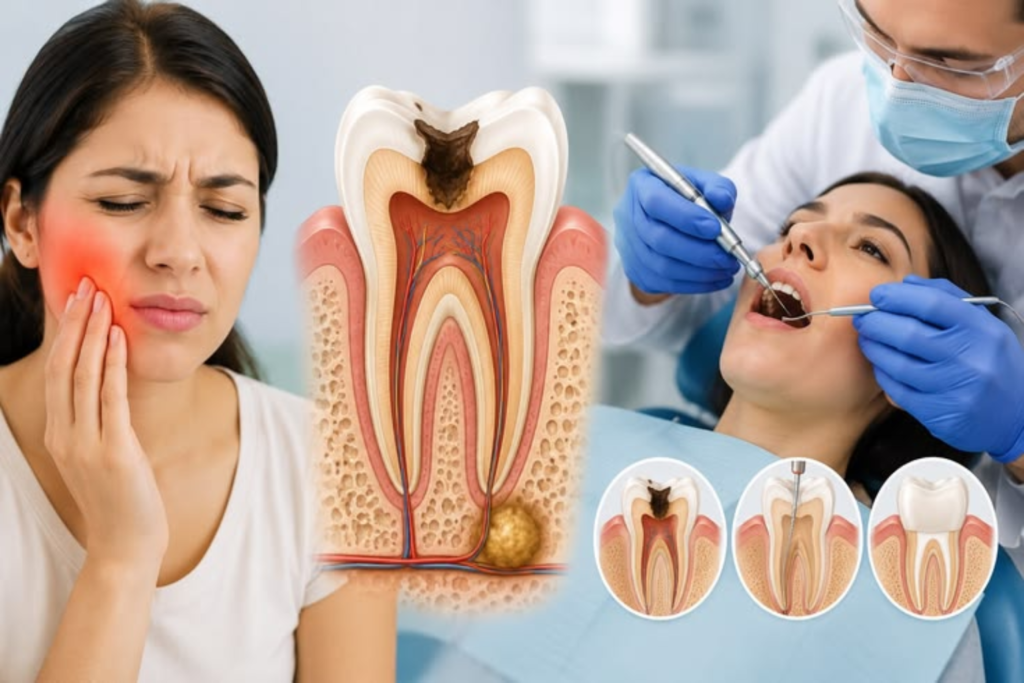
Patients may notice:
- Pressure
- Vibration
- The sensation of instruments being used
- Temporary jaw fatigue from keeping the mouth open
The experience can vary between patients.
If discomfort occurs during treatment, the patient should tell the dentist so the situation can be assessed and managed appropriately.
What Happens After a Root Canal?
After the procedure, the treated tooth may feel different for a short period.
Some patients experience:
- Mild tenderness
- Sensitivity when biting
- Awareness around the treated tooth
- Temporary soreness in the surrounding area
These symptoms can occur as the tissues around the tooth respond to treatment.
However, symptoms that are severe, worsening or persistent should be discussed with the treating dentist.
Eating After Root Canal Treatment
Eating instructions depend on the stage of treatment and whether the tooth has received its definitive restoration.
If a temporary restoration has been placed, additional care may be recommended until the final restoration is completed.
Patients should follow the specific instructions given by their dentist.
In particular, avoiding excessive force on a tooth that is awaiting definitive restoration can help reduce the risk of damage.
Can You Brush After a Root Canal?
Normal oral hygiene should generally continue after root canal treatment unless the dentist gives different instructions.
Patients should continue to:
- Brush their teeth
- Clean between teeth
- Maintain gum hygiene
- Follow recommended dental-care instructions
The treated tooth still forms part of the overall mouth and requires regular maintenance.
How Long Does Recovery Take After RCT?
Recovery varies according to the condition of the tooth and the surrounding tissues.
Some patients return to normal activities quickly, while others may experience tenderness for a few days.
Recovery can be influenced by:
- Severity of the original infection
- Condition of tissues around the root
- Complexity of treatment
- Previous dental treatment
- Individual healing response
The absence or presence of immediate discomfort does not by itself determine whether the treatment has been successful.
When Should You Contact the Dentist After RCT?
Contact the dental clinic if you experience:
- Severe or increasing pain
- Significant swelling
- Persistent symptoms
- A restoration that becomes loose
- A tooth that feels excessively high when biting
- A temporary filling that falls out
- Difficulty chewing that does not improve
The dentist can determine whether the symptoms are part of the expected healing process or require further attention.
What If the Temporary Filling Falls Out?
A temporary restoration can occasionally become damaged or dislodged.
If this happens, contacting the dental clinic is advisable.
The treated tooth may require protection until the definitive restoration is placed.
Patients should not attempt to permanently repair the restoration themselves.
Why Follow-Up After Root Canal Treatment Matters
Follow-up allows the dentist to evaluate the treated tooth and its restoration.
Depending on the case, follow-up may assess:
- Symptoms
- Bite
- Restoration
- Gum condition
- Tooth stability
- Healing around the root
Some endodontic problems require longer-term observation, particularly when there was significant infection before treatment.
Root Canal Treatment in Anna Nagar, Madurai
For patients searching for Root Canal Treatment near Anna Nagar, choosing a clinic that is convenient for follow-up can be useful because endodontic treatment may involve more than one stage.
Dr. Amritha’s Dentistry is located in Vaigai Colony, Anna Nagar, Madurai, Tamil Nadu – 625020.
Patients from Anna Nagar and nearby areas can discuss their tooth pain, sensitivity, swelling or previously treated tooth with the dental team and receive an assessment before treatment is planned.
A Practical Root Canal Treatment Journey
The overall process can be understood as:
Assessment → Diagnosis → Anaesthesia → Isolation → Access → Canal identification → Working-length determination → Cleaning → Shaping → Irrigation → Medication when required → Canal filling and sealing → Evaluation → Definitive restoration → Follow-up
Not every patient follows exactly the same sequence or number of appointments. Treatment is adapted to the condition and anatomy of the individual tooth.
Root Canal Treatment: The Important Takeaway
Root canal treatment is more than simply “removing the nerve.”
It involves identifying the affected tooth, accessing its internal canal system, cleaning and disinfecting it, preparing the canals, sealing them appropriately and then restoring the tooth according to its structural and functional needs.
For patients seeking Root Canal Treatment in Anna Nagar , Madurai, understanding the treatment stages can make the process easier to discuss with the dentist and can help patients understand why diagnosis, treatment quality and final restoration all matter.
Choosing Root Canal Treatment in Madurai
When a tooth develops an internal infection or pulp-related problem, choosing treatment should involve more than simply looking for the nearest dental clinic.
Patients can consider the dentist’s relevant experience, the diagnostic approach, treatment planning, restoration requirements and follow-up care.
For someone searching for Root Canal Treatment in Madurai, these factors can be particularly useful when comparing dental-care options in areas such as Anna Nagar and Vaigai Colony.
At Dr. Amritha’s Dentistry, Vaigai Colony, Anna Nagar, Madurai, the treatment decision can be based on the condition of the individual tooth and the patient’s overall dental requirements.
Meet Dr. Amritha Lenin
Dr. Amritha Lenin is an Orthodontist and Aesthetic Dentist whose professional areas include orthodontics, aesthetic dentistry, digital smile design and laser dentistry.
According to her professional profile, she has:
- 7 years of experience in general dentistry
- 3+ years of specialized experience in orthodontics
- Fellowship in Advanced Aesthetic Dentistry (FAAD)
- Training/certification in Advanced Laser Dentistry
- Training in Digital Smile Design & Facial Aesthetics
- Professional association with Chettinad Dental College and Research Institute
Her clinical interests also include Invisalign and clear aligners, metal and invisible braces, aesthetic dentistry and smile transformation.
Although Root Canal Treatment is an endodontic procedure, general dental knowledge and comprehensive treatment planning are important when evaluating a tooth that may subsequently require restorative treatment.
Patients can discuss their symptoms, existing dental work and treatment concerns during a consultation before an appropriate treatment pathway is determined.
Why Diagnosis Matters Before Root Canal Treatment
A patient’s description of pain is useful, but it does not provide the complete clinical picture.
Before recommending RCT, the dentist may need to evaluate:
- The affected tooth
- Pulp status
- Tooth structure
- Root condition
- Surrounding tissues
- Existing restorations
- Bite
- Dental imaging
- Overall restorability
This helps distinguish a tooth that genuinely requires endodontic treatment from one where another treatment may be more appropriate.
A diagnosis-first approach can also help avoid unnecessary procedures.
What Should You Ask Before Starting RCT?
Patients can make their consultation more informative by asking questions such as:
- What is causing my tooth pain?
- Does this tooth definitely require root canal treatment?
- Can the tooth be restored after RCT?
- Is there a crack or fracture?
- What does the dental X-ray show?
- How many canals does this tooth have?
- How many appointments might I need?
- Will the tooth require a crown afterward?
- What alternatives are available?
- What should I do if symptoms continue after treatment?
Understanding the reasoning behind the recommendation can help patients participate more confidently in treatment decisions.
Root Canal Treatment Is Not the Same for Every Tooth
A front tooth, premolar and molar can have substantially different internal anatomy.
Treatment can also vary depending on whether the tooth is:
- Newly diagnosed
- Previously restored
- Heavily decayed
- Cracked
- Traumatized
- Previously root-treated
- Associated with an infection
Therefore, an online description of a “standard root canal” cannot predict exactly what one individual patient will require.
What If Root Canal Treatment Is Not the Best Option?
Preserving the natural tooth is desirable when it can be treated and restored predictably, but RCT is not appropriate for every tooth.
Depending on the diagnosis, alternatives may include:
Conservative Dental Treatment
If the pulp remains capable of recovery, a less invasive treatment may sometimes be considered.
Root Canal Retreatment
A previously root-treated tooth with persistent or recurrent disease may require assessment for retreatment.
Endodontic Surgery
In selected situations, surgical endodontic treatment may be considered.
Extraction
If the tooth cannot be predictably restored or has an unfavorable prognosis, extraction may be recommended.
Tooth Replacement
Following extraction, options may include a dental implant, bridge or removable prosthesis depending on the patient’s needs.
The appropriate choice should be based on the individual clinical findings.
Root Canal Treatment and Long-Term Tooth Care
Completing an RCT does not mean the tooth no longer needs dental care.
The treated tooth remains part of the patient’s natural dentition and should continue to receive routine oral hygiene and professional monitoring.
Long-term care can include:
- Regular brushing
- Cleaning between teeth
- Maintaining healthy gums
- Attending dental examinations
- Protecting the restoration
- Managing grinding or clenching when clinically necessary
The supporting tissues and natural tooth structure remain important even after the internal pulp has been treated.
Can a Root-Treated Tooth Last for Years?
A root-treated tooth can remain functional for many years, but no dentist can guarantee a specific lifespan for every tooth.
Long-term outcome can be influenced by:
- Amount of remaining tooth structure
- Quality of the restoration
- Oral hygiene
- Gum health
- Bite forces
- Grinding or clenching
- New decay
- Fracture
- Regular dental care
This is why both the root canal treatment and the definitive restoration matter.
Why Follow-Up Should Not Be Ignored
A patient may feel better after treatment, but symptom improvement alone does not replace professional evaluation.
Follow-up may allow the dentist to assess:
- Healing
- Symptoms
- Restoration
- Bite
- Surrounding tissues
- Any new dental concerns
The appropriate follow-up schedule varies according to the individual case.
Root Canal Treatment for Patients in Anna Nagar
For residents searching for Root Canal Treatment in Anna Nagar, Madurai, proximity can be useful when treatment requires multiple appointments or follow-up.
Dr. Amritha’s Dentistry is located in Vaigai Colony, Anna Nagar, Madurai, Tamil Nadu – 625020.
The clinic can therefore be a convenient local option for patients from Vaigai Colony, Anna Nagar and surrounding areas of Madurai who need assessment for persistent tooth pain, sensitivity, swelling or a suspected dental infection.
Root Canal Treatment Near Vaigai Colony
Patients specifically searching for Root Canal Treatment near Vaigai Colony may want to consider both clinical suitability and accessibility.
A conveniently located dental clinic can make it easier to attend:
- Initial examination
- Diagnostic appointments
- Root canal treatment
- Restoration appointments
- Follow-up assessments
Dr. Amritha’s Dentistry is located at:
Vaigai Colony, Anna Nagar, Madurai, Tamil Nadu – 625020
Frequently Asked Questions About Root Canal Treatment
Root Canal Treatment is a dental procedure used to treat disease or damage affecting the pulp and root canal system of a tooth. It is intended to preserve the natural tooth when the tooth remains suitable for restoration.
Symptoms such as persistent tooth pain, prolonged temperature sensitivity, pain while biting or swelling can indicate a problem requiring assessment. However, symptoms alone cannot confirm that an RCT is necessary.
Yes. Some teeth with pulp damage or infection may produce few noticeable symptoms. A dental examination and appropriate diagnostic testing can identify problems that may not be obvious from pain alone.
Local anaesthesia is generally used during RCT. Patients may experience pressure or vibration during the procedure, and some temporary tenderness can occur afterward. Significant or persistent pain should be discussed with the dentist.
Treatment time varies according to the tooth, number and complexity of canals, infection, previous treatment and other clinical factors. The dentist can provide a more individual estimate after examination.
There is no fixed number of appointments for every patient. Some cases may be completed in fewer visits, while complex or previously treated teeth can require additional appointments.
A crown may be recommended when the remaining tooth structure and functional requirements indicate that full coverage would be beneficial. The need depends on the individual tooth.
Sometimes. If a crack has affected the pulp but the tooth remains structurally restorable, RCT may form part of the treatment. Certain fractures can make the tooth unsuitable for preservation.
Yes. Persistent or recurrent disease can occur in a previously treated tooth. The cause needs to be investigated to determine whether retreatment, surgical treatment or extraction is appropriate.
An untreated tooth with significant pulp infection or disease may develop continuing symptoms, infection around the root or an abscess. The progression varies, so professional assessment is advisable rather than waiting for symptoms to become severe.
Eating instructions depend on the stage of treatment and the type of temporary or definitive restoration placed. Patients should follow their dentist's specific instructions and avoid excessive force on a tooth awaiting final restoration.
Continue regular brushing and interdental cleaning and maintain routine dental examinations. The restoration and surrounding tissues also need ongoing care.
Yes. Root canal treatment does not make the remaining natural tooth immune to decay. Good oral hygiene and regular dental care remain important.
Contact the dental clinic if you experience severe or increasing pain, significant swelling, persistent symptoms, a loose restoration or a noticeable problem with your bite.
Patients looking for Root Canal Treatment in Madurai, particularly around Anna Nagar and Vaigai Colony, can consult Dr. Amritha's Dentistry, Vaigai Colony, Anna Nagar, Madurai, Tamil Nadu – 625020 for an assessment of the affected tooth and discussion of appropriate treatment options.
Local Root Canal Care in Anna Nagar, Madurai
If persistent tooth pain, sensitivity, swelling or a damaged tooth is affecting your daily life, delaying assessment may allow the underlying problem to progress.
The appropriate treatment depends on the diagnosis, not simply on the presence of pain.
For patients in Vaigai Colony, Anna Nagar and nearby areas of Madurai, Dr. Amritha’s Dentistry provides a local point of consultation for evaluating dental problems that may require root canal treatment.
Book a Root Canal Consultation in Madurai
If you have persistent tooth pain, prolonged sensitivity, discomfort while biting, swelling or a previously treated tooth that has become symptomatic, arrange a dental assessment rather than relying on self-diagnosis.
Dr. Amritha’s Dentistry
Vaigai Colony, Anna Nagar, Madurai, Tamil Nadu – 625020
Phone: 090032 21393
Book a consultation to have your tooth assessed and discuss whether Root Canal Treatment is appropriate for your dental condition.
Dr. Amritha’s Dentistry
Dr. Amritha’s Dentistry,
Vaigai Colony, Anna Nagar, Madurai, Tamil Nadu – 625020
Phone: 090032 21393
Contact the clinic to schedule a consultation for root canal treatment in Madurai.